Blog Archives
It’s Holy Week! Part 3
Monday, we looked at the big picture of the history of God’s relationship to people up to the Day of Atonement. Yesterday, we looked at the entrance of Jesus into the story. Today, let’s look at the Passion of Christ and the rest of the Jesus story.
21. Jesus is arrested, abandoned and denied by his disciples, beaten, mocked, and sentenced to death by Rome’s most barbaric form of execution.
22. Jesus is forced to carry the crossbeam through the crowded streets of Jerusalem up to the site of his execution.
23. Jesus is too weak to complete the trip and collapses. A member of the crowd is chosen at random by the guards to carry the crossbeam for Jesus the rest of the way.
24. At Golgatha, Jesus is stripped naked (yes, as naked as he was born).
25. The guards attach Jesus to the crossbeam with iron spikes through his wrists and to the stake with spikes through his ankles and raised to hang between two thieves until his struggle for breath overcomes him and he gives up his spirit to God and completes the sacrifice.
26. At the moment of his death, there is an earthquake and the curtain separating the Holy of Holies from the rest of the temple is torn in half from top to bottom.
27. Jesus’ execution lasts only six hours, considerably less time than most people endured the experience.
28. Jesus is buried and mourned, and the disciples hide in fear that they will be arrested and executed next.
29. The women at the tomb discover Jesus’ resurrection early in the morning three days later. They become the first bringers of the good news (gospel) that Jesus is alive.
30. Jesus appears to his disciples and to many other people over the 40 days following his execution, eating and drinking with them and allowing them to touch him to prove that he indeed has retaken physical form.
31. Jesus ascends into the clouds after promising to send his spirit to be with his followers and to return again one day soon to bring the kingdom of heaven.
There are so many wonderful moments in this part of the story of God. Jesus, a physical human being, dies a physical human death (of the worst kind), and is resurrected to again be a physical human being. The women are the first evangelists. Jesus promises to leave his spirit with those who believe in him.
But my favorite moment is the moment of Jesus’ death when the curtain is ripped in two. Remember the curtain? That piece of fabric hanging in the entrance to the Holy of Holies? It served as a reminder of the barrier between God and God’s people. It blocked people from God’s presence with them.
In fact, only the people considered to be the cleanest and most holy were even allowed near the Holy of Holies. Even the high priest, the holiest person out of all of God’s people, was only allowed inside once a year to sprinkle sacrificial blood on the Ark to atone for the sins of the people. God was just too holy to be with the people. The people were just too unholy to be with God.
But God came to the people anyway, in the physical human form of Jesus. God became the ultimate blood sacrifice–the last and final atonement for all the sins of all people everywhere throughout all of time. God ripped the curtain (top to bottom) at the moment of Jesus’ death to show the people that there was no more need to separate the holy from the unholy–the sacred from the secular.
And when I think that God, his son not sparing,
sent him to die, I scarce can take it in,
that on that cross, my burden gladly bearing,
he bled and died to take away my sin.
Then sings my soul, my savior God, to thee.
How great thou art! How great thou art!
It’s Holy Week! Part 2
Yesterday, we looked at the big picture of the history of God’s relationship to people up to the Day of Atonement. Today, let’s look at the entrance of Jesus into the story.
13. Then Jesus is born, and he is called Emmanuel, which means “God with us.”
14. No longer is God among the people yet blocked from their access. Jesus lives with the people, learns and grows with them, eats and drinks, sleeps, speaks, heals, reprimands, and teaches.
15. Jesus says that those who see him and know him also see and know God.
16. Jesus is anointed at Bethany for his coming death.
17. When the people celebrate Jesus’ entrance into Jerusalem–what we call Palm Sunday–they acknowledge that Jesus is fulfilling the long-anticipated role of the Messiah, the one who has come to save them and restore the original order as God intended.
18. Jesus washes his disciples’ feet as an example of their role in each others’ lives.
19. Jesus breaks bread and passes the cup of wine to his disciples to foreshadow his impending arrest and execution.
20. Jesus prays in the garden with his disciples nearby–by some accounts so fervently that the capillaries break on his forehead and he begins to sweat blood–not only that he might yet be spared his role as the sacrifice for the people’s sins but also that he accepts that role.
This is what I love about the Jesus part of the story of God. Here we see Jesus in his human vulnerability. Though he is fully divine and capable of changing the end of the story, Jesus is also fully human and willingly becomes the final blood sacrifice as the atonement for the sins of the people–this time not only the people of God but all people everywhere throughout the course of history.
The scene in the garden is one of my favorite Jesus moments. We see Jesus at his most intimate, praying to God not for the sake of others but for his own sake. We see the intense struggle between the divine and human in Jesus. This is no small matter, this business of execution and sacrifice. This is not easy or pleasant, but it is worthwhile and shows the extent of God’s love for the people–of Jesus’ love for the people, all people.
Blessed is the one who lays down their life for the sake of a friend. And Jesus has called us friends.
I like to think the blood Jesus sweats during his prayer foreshadows the finality of his sacrifice. Like the blood sprinkled on the Ark of the Covenant in the Holy of Holies on the Day of Atonement, the first drops of Jesus’ blood are spilled in the garden as he struggles to accept his role as the animal sacrificed on the temple’s altar.
But my favorite moment is still coming…
It’s Holy Week! Part 1
One of the most significant elements in body theology is the actual, physical life, death, and resurrection of Jesus. That’s why Christmas, Holy Week, and Easter Sunday are so pivotal. We Christians are who we are because of who Christ is and what Christ did for us. Let’s take a little flash Bible course this week to dig into the significance of what we are about to celebrate.
Sometimes looking at the big picture of the course of biblical history can help us understand what brings us to this moment of Christ’s preparation for death. Here are some key elements of the story of God.
1. God takes evening walks with Adam and Eve in the garden.
2. Becoming aware of their nakedness and feeling ashamed causes them to hide from God.
3. God’s people become afraid of God and ask Moses to speak to God on their behalf.
4. God’s people are afraid even of the glory of God reflected on Moses’ face, so he has to wear a veil until the glory fades.
5. God instructs the people to build the Ark of the Covenant, where God’s presence will be confined among them.
6. The people never touch or open the Ark of the Covenant because it is so holy.
7. The Ark lives in its own tent among them, called the Tabernacle, where the people come to worship God.
8. After Moses, God speaks only to specific people God chooses, usually prophets, kings, or priests. These chosen few share God’s words with the people–who often do not listen.
9. To see the face of God is to die, and even the prophet Elijah–who asks to see God’s face–covers his face with his robe before meeting God at the mouth of the cave.
10. Once God’s people settle down in one place and begin to build houses instead of tents, God instructs King Solomon to build a temple for God to live in.
11. God’s presence is reserved for the Holy of Holies–a small area within the temple restricted from everyone where the Ark is kept, the entrance to which is blocked with a thick curtain.
12. Once a year, on the Day of Atonement, the high priest goes through an elaborate cleansing ritual in preparation to enter the Holy of Holies and sprinkle the blood of the sacrificed animal to atone for the people’s sins. (They even tie a rope around his foot each time in case he dies from the experience of being with God and has to be dragged out to be buried since no one else is allowed to enter the Holy of Holies, even to retrieve a dead body.)
To be continued…
Maternal Language for God
It’s Blast from the Past Week on Holistic Body Theology. Here are some of my theological reflections from a class I took on “Women in Church History and Theology” at Fuller Seminary.
First posted May 9, 2008
Julian of Norwich, Showings
The idea of referring to God as Mother, or even as Mother-Father, has never sat comfortably with me. I cherish the image of God as Father and attribute much of my relationship with God to the understanding that image has fostered. (Note: I’ve come a long way since first writing this post.)
Nevertheless, I felt no discomfort when reading Julian of Norwich’s Showings. Perhaps that is because it was not my first reading of her revelations using such prevalent maternal language and imagery when referring to God and especially to Jesus. Or perhaps I was not uncomfortable because she is not agenda-driven in her writing. Though Julian often refers to Jesus as our Mother, she continues to refer to him as “he” and just as often pairs the parental reference as God our Father and God our Mother.
Particularly, Julian is writing in explication of sixteen visions she had of Jesus revealing something of himself to her. If her explanations include maternal imagery in conjunction with paternal imagery, I am not upset by it but appreciate what her revelations add to my understanding of God in the role of tender nurturer.
Hildegard and Hadewijch
Likewise the use of maternal imagery in the writings of Hildegard and Hadewijch, as recorded by F. Gerald Downing, does not bother me for similar reasons. These women are not pushing an agenda, trying to force out the man in favor of the woman, or trying to emasculate men or make God a woman. They are simply recording their own experiences of personal encounters with Jesus, using the kind of language and imagery that is both appropriate to their own life experience and to the way in which Jesus chose to reveal himself to them.
As Downing notes, “Hadewijch enjoys a fully tactile (and indeed erotic) sensation of being embraced by him [Jesus] during a mass,” and Julian’s less sexually-charged image of “Christ’s motherly suckling care” is just as intimate and personal a description (429). Downing notes also that the images these women draw on in their writings are all scriptural and traditional sources available but not utilized by other theologians like Anselm and Thomas Aquinas (430).
This kind of imagery, Downing argues, leads to an understanding of “the actions of Father, Son, and Spirit towards us [as] personal, specific, and interconnected, culminating in the Incarnation of the Word and the response the Spirit enables” (433). The point is not a triumph of feminine imagery over masculine but of personal, bodily imagery of a real and experienced relationship with God over impersonal, abstract imagery of a distant God who is perfect but inaccessible.
Marriane Meye Thompson, “Speaking of God”
Marianne Meye Thompson writes in her article “Speaking of God” that it is important not to lose one’s audience for the sake of pushing a theological conviction that the way has not been prepared for (6). What is the help in praying to God as Mother before a room full of people who have no idea what you are doing?
But Julian teaches her readers, in the midst of her sensuous and bodily language, how to imagine God (and particularly Jesus) as relating to us not just like a Father but like a Mother as well: “for God’s fatherhood and motherhood is fulfilled in true loving of God; which blessed love Christ works in us” (chapter 60). I think Thompson would agree that reading Julian out of context would be detrimental to an unprepared audience, but Julian’s unashamed use of maternal language (“[Jesus] feeds us and nurtures us: even as that high sovereign kindness of motherhood [does],” chapter 63) in general draws no particular criticism.
Paul Jewett, The Ordination of Women
Paul Jewett would probably also agree that Julian’s use of maternal language is appropriate because they are just metaphors. She still uses the masculine pronoun “he” to refer to each of the three persons of the Trinity—“for he [Jesus] is our Mother, Brother, and Savior” (chapter 58, emphasis added)—which is the only thing Jewett is concerned about.
She also does not use maternal language to the exclusion of paternal language, so Jewett would not be too concerned about her usage but would probably praise her ability to integrate these images so smoothly into her descriptions. In fact, Jewett actually declares that “the church needs to teach that God is as much like a mother as like a father” (139), and thus Julian does.
Is feminine imagery for God “un-biblical?”
Thompson notes that while there is a “predominance of male imagery for God” in the Bible, it is also true that “the Bible does use feminine imagery for God” as well (2). Since “much of our language for God is metaphorical and analogical” (1), there is no grounds for the claim that it is “unbiblical to picture God in analogies from the sphere of women’s experience” (3). What Julian does in her writing is provide a balanced analogy of the parental relationship, both that of the Father and the Mother whenever she deems appropriate. In that way, she is able to elevate from a “second degree” status the part of the woman in the image of God (5).
Jewett echoes Thompson in the acknowledgement that women have been demeaned in the church, relegated to a secondary or “human-not-quite-human” status in relation to men (119). Since God has revealed himself in masculine language through the biblical authors, and since theologians have followed that tradition in referring to God, Jewett argues that it is appropriate to use masculine language, especially the masculine pronoun “he,” to refer to God (123).
Nevertheless, it is important to educate Christians that while a masculine pronoun can be more appropriate in some contexts than a feminine one, that usage must be balanced with the recognition that “God so transcends all sexual distinction as to be neither male nor female, yet appropriately likened to both” (124).
Julian does just that: likens God to both a Father and a Mother, “as truly as God is our Father, so truly God is our Mother” (chapter 59). Ultimately, Jewett asserts, God has revealed himself not as masculine but as personal, the “personal Subject, saying I am who I am” (127), so while masculine language about God is appropriate because of tradition, “we must not continue to think of the male as supremely the bearer of the image of God” (128).
Julian helps us understand God in feminine terms as well with her many references to Jesus as the suckling mother who cares for his children: “The mother may give her child suck of her milk, but our precious Mother Jesus feeds us with himself” (chapter 60).
Forward Friday: What’s Yours?
This week I reflected on four aspects of body theology that are important to me: gender, sexuality, community, and body image.
This weekend, try reflecting on one aspect of body theology that is important to you. Choose from the list below or make up your own. Share what you reflected on in the comment box below.
- identity
- image of God
- incarnation of Christ
- physicality
- sexuality
- body image
- media literacy
- cultural discernment
- community
- body of Christ
- equality
- service
- social justice
- creation care
- spirituality
Reflections on Body Theology: 10 Lies I Believe about My Body

1) I’m not pretty.
2) Even with makeup, I’m not pretty.
3) I need to lose weight.
4) I have too much hair in the wrong places.
5) I am responsible for how men react to the way I look.
6) Dressing in clothes that aren’t baggy is immodest.
7) Showing my legs or arms is immodest.
8) I should be ashamed of myself for wanting to look pretty.
9) My husband is not really attracted to me.
10) I’m not feminine enough.
Forward Friday: Start a Conversation
This weekend, try using the Bible as a conversation-starter. As you converse with someone who does not agree with you, remember to:
1) Listen before you speak.
2) Learn from the other person’s perspective.
3) Be willing to be wrong.
4) Explore both the boundaries and the space between through your conversation.
5) Look for ways for the current conversation to spark future conversations as you build a relationship with your conversation partner.
Come back and share your experience with all of us. Let’s learn from each other how to be conversation-starters.
Conversation: Are You an Ender or a Starter? Part 1
I used to be a conversation-ender.
Growing up in the South, I was immersed in a conservative environment, both religiously and politically. I grew up Presbyterian, in a long bloodline of Presbyterians past, which is a denomination that puts great emphasis on knowledge and scripture. I grew up with sword drills, and I was a quicker draw than most. I knew all the Bible stories and could answer all the Sunday school questions.
I wouldn’t trade that upbringing. I have deep respect for my Presbyterian roots. They are strong and deep. I still maintain most of my early Presbyterian theology and appreciate my early exposure to a love of the word of God.
What I would trade, however, is how I used that word of God. I was quick to draw my sword and fight, and I fought to draw blood. I fought to win.
Black-and-white theology
The appeal of a black-and-white theology is that there is a straight answer for everything. There are neat categories. There is order, and we Presbys love us some order. There is comfort in knowing what is right and what is wrong, who is in and who is out, where the line in the sand is and which side we’re on.
The problem with black-and-white theology is that it is fear-based. Fear of complication, wrong answers, messy categories, disorder. Fear of not knowing, not being sure, or maybe just not being right. Fear of being disagreed with. Fear that there could be more than one valid answer. Fear of losing that comfort and security.
The good and bad of boundaries
Having clear boundaries makes us feel safe. That’s a natural human trait. We’re designed to want and need boundaries. Boundaries are good and necessary.
But whose boundaries?
If boundaries are good and necessary, then the more boundaries we have, the better off we will be, right? We will be safer and more comfortable. We will be more sure. More right. So we create more and more boundaries for ourselves, encroaching on the space within. Little by little, we sacrifice our safe space until we find ourselves…in prison!
Enter Jesus. Enter truth. Enter freedom. Enter fullness of life. Enter fulfillment of the law. Enter space.
The best boundaries we can live by are God’s boundaries, not ours. But how do we know what God’s boundaries are? Who’s to say who’s right and who’s wrong, who’s in and who’s out, who’s free and who’s in prison, whose space is God’s space?
Better to be safe than sorry, right?
Better slap down those who threaten the safety of our comfortable boundaries, right?
Better end the conversation now than risk stepping out into all that space, right?
Right?!
To be continued in tomorrow’s post…
Forward Friday: 4 Ways to Pray (Naked)
In keeping with tradition, we’re wrapping up this week’s theme on praying naked with four suggestions. Choose the one that best fits, and come back to share your experience.
1) Pray in the bathtub (centering prayer): As you remove each article of clothing, remove along with it some distracting thought. Allow the water surrounding you to remind you of the movement of the Holy Spirit within you. Don’t be discouraged by distracting thoughts, but allow your nakedness to remind you of your purpose, and continue to set distractions aside. Once you are centered (this can take anywhere from 15-30 minutes, so don’t rush yourself), allow God to speak to you. This might take the form of a recurring distracting thought, an old emotional wound, a nagging memory of an unreconciled relationship, a line of music or verse of scripture, or anything else. Whatever emerges, take it to God and experience God’s love, healing, forgiveness, acceptance, and renewal.
2) Pray in your room (intercessory prayer): As you undress, be aware of the vulnerability of your naked body. Allow that vulnerability to guide your conversation with God. As you become more comfortable with your nakedness–alone in your room–allow yourself to experience compassion for those whose vulnerability is taken advantage of. If that is not a natural experience for you, read Stacey’s post as an example, and ask God to open your eyes not only to your own needs but also to the needs of others.
3) Pray semi-covered (inner healing prayer): For those of you who have experienced trauma and may be triggered by the vulnerability of your nakedness, try undressing and then covering yourself with a towel, robe, or blanket. Allow the covering to be an intentional reminder of God’s protection over you. Read Gen 2:25, slowly, aloud, once every five minutes for 30 minutes. Between readings, sit quietly and allow God’s truth about your body to take root. As any shameful memories arise, offer them to God. Ask God to enter those memories with you and show you the truth about yourself. If you’re feeling too vulnerable at any point, try putting some of your clothes back on, one article at a time. Allow the act of getting dressed to be an intentional reminder of God’s protection over you.
4) Sleep naked (resting prayer aka letting-God-do-all-the-work): For those of you who find the whole conversation about praying naked to be uncomfortable or ridiculous (or if the above suggestions just aren’t for you), try simply sleeping naked tonight. Again, as you undress, be mindful that you are uncovering yourself before God. Ask God to enter your experience and show you something new. (If you sleep with a partner, be sure to warn him or her that you are sleeping naked tonight as a spiritual exercise, not as an invitation to sexy time. This is your chance to experience your sexuality within yourself and with God. Have sexy time tomorrow night.)
Guest Post: 3 Must-haves for Lent: Part 1
My friend Jenn Cannon has graciously agreed to share her experience of fasting during this Lenten season and its impact on her body theology. You can find more of her writing here.
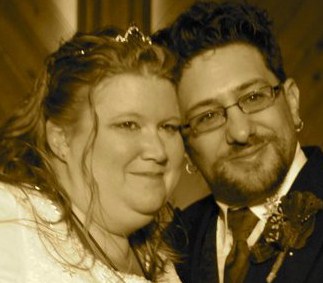 I am a musician, a photographer, a theologian, a customer service rep. I am a wife, a stepmom, a sister, a daughter, an aunt. But mostly I am a child of God striving to live my crazy life the best way I know how. These writings have been born from my journey back to health that I started in June 2011. At that time, I weighed over 300 pounds and needed to lose at least half my weight to be considered in a healthy range. Since then, I’ve lost almost 50 pounds through adjusting my diet and adding exercise. The surprising side effect is the emotional changes that go along with getting healthy – and that is what has prompted me to begin to write.
Last week, Christians around the globe marked the beginning of the season of Lent. This season of 40 days (well, really 46) of preparation and repentance is observed so that we can prepare our hearts and minds for the coming of Holy Week and Easter. We intend to spend these 40 days focused on God and Christ and the upcoming sacrifice that saves us.
At least – that’s the intent.
Lenten Fasting
Historically, Lent has included a fast of some sort: abstaining from certain foods, from all food, from bad habits, from sex… The Lenten fast has taken so many different forms over the years. In more Orthodox congregations, the fast is prescribed and required (with some dispensations granted for the extremely ill or weak). In many Protestant churches, the fast is voluntary (at most) and unknown (at least). Some congregations don’t observe Lent at all.
What then does this Fast, this abstaining, really mean? What is the purpose and how do we observe it correctly? And really – what does fasting have to do with Body Theology at all?
The Lenten practice was originally a 3-part one: prayer, fasting, service. The idea is that one practice without the other 2 is incomplete. So – if we choose to fast simply to fast, we miss the mark. The whole point is to prepare ourselves for Christ’s sacrificial death on the cross and life-giving resurrection. If we focus ONLY on the fast, we miss the rest of the preparation.
Lenten Prayer
Fasting without prayer is simply denying ourselves. If we use the popular example of food – we are simply denying ourselves sustenance, and missing the point. Prayer – focus on GOD – is crucial. Without it, we are perhaps using the fast in a multitude of incorrect ways: pride at our will or self-control; attempting to manipulate others (as in the case of a hunger strike); proof of our own piousness; and many others. And physically, denying ourselves a certain food can enhance the desire for it – to such an extent that it could lead to a binge. Unhealthy AND ungodly.
When we add prayer – or scripture reading or any other discipline that focuses our attention on God instead of ourselves – we immediately rescue the Fast from the worldly concerns and it can become, again, a part of worship. We can worship through our physical acts, provided our hearts and minds are in the right place.
Lenten Service
As we worship God physically and spiritually, we must remember that we are called to love our neighbor, as well. When pressed by the Sadducees to name the greatest commandment in the Law, Jesus answered:
“Love the Lord your God with all your heart and with all your soul and with all your mind.” This is the first and greatest commandment. And the second is like it: “Love your neighbor as yourself.” All the Law and the Prophets hang on these two commandments. ~ Matthew 22: 34-40
Christ didn’t make a distinction between loving self, loving God, and loving others. They are all tied together into one answer. The Greatest Commandment. And so, too, should our Lenten practice be….
Come back tomorrow for the thrilling conclusion!

 Holistic Body Theology