
Blog Archives

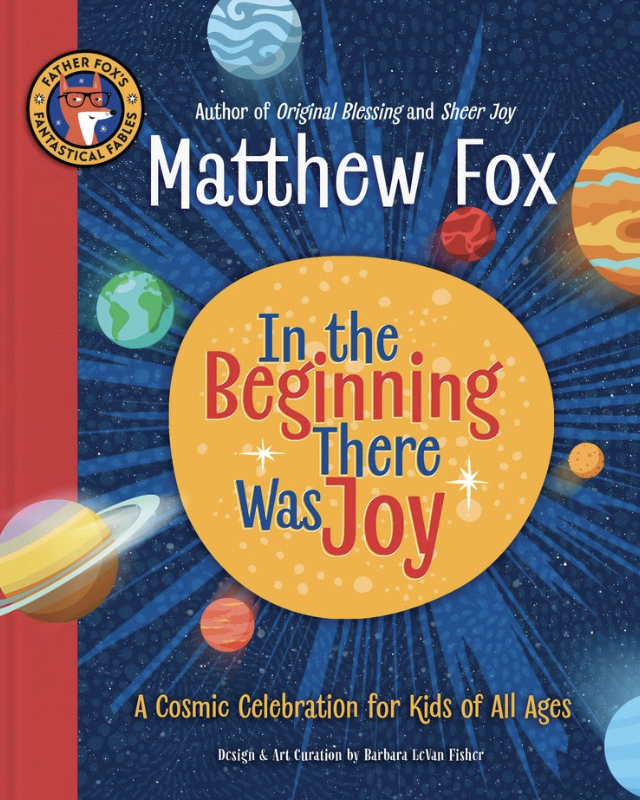
Book Review: In the Beginning There Was Joy: A Cosmic Celebration for Kids of All Ages by Matthew Fox

In the Beginning There Was Joy by Matthew Fox is an engaging and joyful introduction to creation spirituality for children—and adults—of all ages. Through a lively and accessible story, Fox invites readers on a cosmic journey that explores the beauty and interconnectedness of all creation. The narrative is centered around the idea that the universe itself is a source of joy, with creation being a vibrant, ongoing celebration.

The book is filled with bright, colorful illustrations that complement the playful tone of the story, making it visually appealing and easy to follow. Fox’s words are poetic and full of wonder, presenting complex spiritual concepts in a fun and digestible way. The story helps children understand the core ideas of creation spirituality—such as the sacredness of all life, the interconnectedness of the universe, and the celebration of creation—as an exciting adventure rather than a distant theological concept.

This book is a perfect way to introduce kids to the traditions of creation spirituality, offering a foundation of awe and reverence for the natural world, while also encouraging a sense of joy and wonder in the process.

In the Beginning There Was Joy is a delightful and accessible book for young readers and families, providing a fun way to explore creation spirituality. With its engaging story and vibrant illustrations, it’s a wonderful introduction to the concept that the universe is a joyful, interconnected celebration. The best part: you don’t have to be a kid or a parent to enjoy this book!

Link-Love:

In the Beginning There Was Joy on Matthew Fox’s Website
Matthew Fox’s Website

#InTheBeginningThereWasJoy

___

Disclosure of Material Connection: I received this book free from the author and/or publisher through the Speakeasy blogging book review network. I was not required to write a positive review. The opinions I have expressed are my own. I am disclosing this in accordance with the Federal Trade Commission’s 16 CFR, Part 255.

Book Review: Creating a Life with God: The Call of Ancient Prayer Practices by Daniel Wolpert

Creating a Life with God by Daniel Wolpert is a highly accessible and practical guide to integrating ancient prayer practices into modern spiritual life. Wolpert introduces a variety of prayer forms—contemplative, liturgical, and communal—offering clear and straightforward steps to help readers incorporate these timeless practices into their daily routines.

What sets this book apart is its focus on practicality. Rather than just offering theological explanations, Wolpert provides actionable advice on how to deepen your connection with God through prayer. Whether you’re new to prayer or looking to enrich an existing practice, Wolpert’s approach makes ancient wisdom feel relevant and easy to apply.

This book serves both as an introduction to prayer and as a guide for those seeking to cultivate a more intentional, reflective prayer life. With its simple structure and practical tips, Creating a Life with God is an excellent resource for anyone wanting to grow spiritually through the discipline of prayer.

Ideal for anyone interested in deepening their prayer life, Creating a Life with God is a clear, practical, and inspiring guide to incorporating ancient prayer practices into modern life. Wolpert’s straightforward approach makes it a valuable tool for spiritual growth.

Link-Love:

Creating a Life with God on The Upper Room
Daniel Wolpert’s Website

#CreatingALifeWithGod

___

Disclosure of Material Connection: I received this book free from the author and/or publisher through the Speakeasy blogging book review network. I was not required to write a positive review. The opinions I have expressed are my own. I am disclosing this in accordance with the Federal Trade Commission’s 16 CFR, Part 255.

You are worth more than your body or your sex appeal.

One of the central themes of holistic body theology is cultural discernment.  Our culture has many valuable gifts to bestow, but there are also many lies and harmful beliefs perpetuated.  That’s why media literacy is so important.  We have to recognize the messages around us and decide for ourselves whether we will accept them as truth or not.

But before we can even develop that discernment, we have to first know who we are.  If our identity is not sure, then we are so much more easily swayed by others’ attempts to tell us who we are or who we should be.  As Christians, we identify as children of God.  The foundation of our identity is built on Jesus, the incarnate divine being, perfectly holy and fully flesh.

Holistic body theology, then, is about realizing our embodied holiness in our everyday lives.  This is hard enough for those of us who live out our lives in quiet and relative obscurity.  How much greater the struggle for secure identity and wise discernment among the many messages of our culture when in the unique opportunity to create those messages for ourselves.

I don’t usually engage in ongoing conversations about the latest thing in popular culture, but Sinead O’Connor’s open letter to Miley Cyrus carries too important a message to worry about getting caught up in current debate.  Regardless of the various opinions floating around about Ms. Cyrus’ motivations, etc., Ms. O’Connor’s effort still gets kudos from HBTB for being willing to speak hard truths about the reality of sexual exploitation of women working in the music industry.

Here are some highlights from her letter:

[…]Nothing but harm will come in the long run, from allowing yourself to be exploited, and it is absolutely NOT in ANY way an empowerment of yourself or any other young women, for you to send across the message that you are to be valued (even by you) more for your sexual appeal than your obvious talent[….]
I’m suggesting you don’t care for yourself. That has to change. You ought be protected as a precious young lady by anyone in your employ and anyone around you, including you. This is a dangerous world. We don’t encourage our daughters to walk around naked in it because it makes them prey for animals and less than animals, a distressing majority of whom work in the music industry and it’s associated media.

You are worth more than your body or your sexual appeal. The world of showbiz doesn’t see things that way, they like things to be seen the other way, whether they are magazines who want you on their cover, or whatever … Don’t be under any illusions … ALL of them want you because they’re making money off your youth and your beauty…

Real empowerment of yourself as a woman would be to in future refuse to exploit your body or your sexuality in order for men to make money from you[….] And its sending dangerous signals to other young women. Please in future say no when you are asked to prostitute yourself[….]

Whether we like it or not, us females in the industry are role models and as such we have to be extremely careful what messages we send to other women. The message you keep sending is that its somehow cool to be prostituted … its so not cool Miley … its dangerous. Women are to be valued for so much more than their sexuality. We aren’t merely objects of desire. I would be encouraging you to send healthier messages to your peers … that they and you are worth more than what is currently going on in your career[….]

The value of Ms. O’Connor’s open letter is that her message is for more than just Miley Cyrus and other women in the music industry.  It is also a message for those relative-obscurity-living-in people like you and I.  We have a responsibility to engage wisely in the world around us.  When we buy magazines or watch videos on Youtube or tune into entertainment news, we are telling the media and the world what we are interested in.  “Sex sells” is a well-known and proven marketing adage for a reason.  Sex sells because people buy it.

So, my dear lovely readers, here is my open letter to you:

Know who you are.  Make choices that reflect your identity and honor your worth.  Live a life that sells what is truly worth buying.  Live a life worthy of the precious, beautiful, unique, beloved child of God that you are.

You, dear readers, are worth more than your body.  You are worth more than your sexual appeal. You are too valuable just because of the simple fact that you are a human being on this earth to believe anything less about yourself or about any other human being on this earth.  You are worth more than the low, base messages in the media.  You and I, and Ms. Cyrus and Ms. O’Connor, and every other person deserve better.  We all deserve to be known and honored and valued and loved for our whole selves — mind, body, and spirit.

Let’s sell that for a change.

Rohr on silence in a culture of noise

We live in a noisy world.

We surround ourselves with entertainment and news and music and talking and texting and constant accessibility to internet.  We immerse ourselves in the many messages we hear from culture, family, church, school, and work.  We are loud and wordy and flashy and full of so much swirling around that it often feels impossible to shhhhhhh… into a place of quiet, stillness, and rest.

Richard Rohr writes about the place of silence in this excerpt below from his recent article “Finding God in the Depths of Silence” in Sojourners (March 2013):

At the less mature levels, religion is mostly noise, entertainment, and words.  Catholics and Orthodox Christians prefer theater and wordy symbols; Protestants prefer music and endless sermons.

Probably more than ever, because of iPads, cell phones, billboards, TVs, and iPods, we are a toxically overstimulated people.  Only time will tell the deep effects of this on emotional maturity, relationship, communication, conversation, and religion itself.  Silence now seems like a luxury, but it is not so much a luxury as it is a choice and decision at the heart of every spiritual discipline and growth.  Without it, most liturgies, Bible studies, devotions, “holy” practices, sermons, and religious conversations might be good and fine, but they will never be truly great or life-changing — for ourselves or for others. They can only represent the surface; God is always found at the depths, even the depths of our sin and brokenness. And in the depths, it is silent.

Thoughts? Comments? Reactions? Share in the comment box below.


Guest Post Series: Five Questions on…Exercise (with Megan)

fivequestionsonExercise

with Megan Gahan

1) Describe your relationship to/experience with exercise.  If it has changed over time, describe the change.

I started out working in gyms, where I trained women of all ages and abilities. Everything was very focused on pounds lost and inches trimmed. My clients would stare at themselves in the mirror, pinching ‘fat’(actually skin) and moaning about their need to lose 20 or more pounds. I remember being stunned at how disconnected they were with their bodies. Losing 20 pounds would have put many of them in the underweight range. Not surprisingly, I critiqued myself harshly during those years. Clients often choose their personal trainer based primarily on appearance, not qualifications (kind of like how you wouldn’t choose a hairdresser whose hair you didn’t like). I would emotionally tear myself apart when the buffest and fittest trainer got chosen over me again. It made me feel very inadequate.  My relationship with exercise was one of necessity.
 
But I wanted so much more. I wanted to help women see themselves and dig into their emotional issues. I wanted to talk to them about self-worth and body image and Jesus’ view of His precious daughters– not just perfect push-up technique (which, incidentally, is also very important).
 
Eventually God led me to a position with Mercy Ministries, a residential faith-based program for young women wanting to overcome life-controlling issues: eating disorders, self-harm, addiction, and abuse. I ran the fitness department and delighted in putting together a well-rounded fitness curriculum. One that incorporated the physical, emotional, and spiritual elements of exercise.
 
My relationship with exercise changed as I worked with the young women in the program. I began to show myself more grace. I started giving thanks to God before my workouts. I was grateful for my body’s abilities and capacity. I also asked God to keep my mind free from comparisons and harsh self-criticism. I wanted my workout to be an offering to Him. That’s what it’s meant to be.
 

2) How has that relationship/experience affected the way you think about your body and/or your self-image?

Working with women who struggled deeply with their body image forced me to be very conscientious of my own. I became aware of how often I allowed negative self-talk to narrate my day-to-day life. I began calling myself out on it, because I needed to walk the talk. In modeling a healthy example for the girls, I also stopped working out for the wrong reasons. If I was having a bad day, or I felt fat, or I felt I needed to work out because I had just inhaled a Costco sized bag in Mini Eggs, I didn’t compulsively reach for my cross trainers. I went to God first. He became my first line of defense, my healthy coping mechanism. I am the first to admit that fitness is a great stress release. But it shouldn’t be your only one. It definitely isn’t the most essential one.
 
My relationship with my body took another turn when I wrote A Love Letter to My Body, where I confronted all the dark, ugly words I had spoken over myself throughout the years. It was extremely difficult, but deep wounds began to heal as my fingers flew over the keyboard. I knew I was much closer to seeing myself as my Creator saw me. 
 

3) How has that relationship/experience affected the way you relate to others?

I will not tolerate ‘fat talk’ in any conversation – not from myself or my friends. I address it right away because I know how damaging it is. 
 

4) How has that relationship/experience affected your spiritual life?

I used to speak such hate over my body that God couldn’t get a word in edgewise. When I finally allowed His still voice to speak love and beauty over me, it changed my spiritual life drastically. I wasn’t calling God a liar anymore. I wasn’t calling his workmanship junk. It’s hard to have a relationship with the One who created you, a relationship built on trust and gratitude, when you’re railing against Him for making your thighs too big.
 

5) What word of wisdom or encouragement would you offer other people on a similar journey?

Don’t hold yourself to a standard that doesn’t exist. If you feel like you have to work out, or you feel guilty when you don’t exercise, that’s a flashing neon sign that you’re headed down a dangerous path. It’s very easy to slip into obsession with fitness and pass it off as ‘getting healthy’ in this day and age. They are not the same thing.
 
For those wanting to begin creating a better relationship with their body, I would highly recommend writing a letter to yours. It is the most transformative exercise I have ever done. After I wrote mine, hundreds of women joined me.  To read through some of their journeys, go to www.shelovesmagazine.com and click ‘A Love Letter to My Body’ at the top right hand side of the page.
 
meganphoto
 

What about you?

Have your own answers to these questions? Why not share them? Email your responses and a recent picture to bodytheologyblog at gmail dot com.  You can also post anonymously if you wish.


Guest Post Series: Five Questions on…Exercise (with Anonymous Guy)

fivequestionsonExercise

with Anonymous Guy

1) Describe your relationship to/experience with exercise.  If it has changed over time, describe the change.

Consistency is my challenge. Exercise perpetuates more exercise for me and inactivity perpetuates more inactivity. Staying somewhere in a healthy middle ground by exercising a few times a week is the toughest. I’ve gone weeks where I exercise 12-14 times for the week and then I’ve gone through a couple weeks where its hard to do anything.
 

2) How has that relationship/experience affected the way you think about your body and/or your self-image?

Body image is largely a control issue for me. It’s been something I could control and when things have been beyond control in life, my mind has thought “well at least I can control how the body looks” and that anxiety is projected outward to the flesh. Being conscious of this idea has helped to be healthier and more moderate, though past emotional damage will always pervade my mindset in some way.
 

3) How has that relationship/experience affected the way you relate to others?

 If I am not confident in my body, I am not confident. My mind goes into ultra-introvert mode and I feel a sense of embarrassment being around others. Shame is a nasty attachment that maladaptive mental habits can create and perpetuate. What I act like on the outside is always a picture of how I’m processing internally.
 

4) How has that relationship/experience affected your spiritual life?

When shame abounds, grace is the last thing I want to accept because something inside me tells me I’m not good enough – that I need to earn it. Of course, with my theological understanding of God, I know better… but the emotional and the rational/intellectual absolutely wage war between each other sometimes and that can adversely affect my overall being and spiritual life. 
 

5) What word of wisdom or encouragement would you offer other people on a similar journey?

Learn to love yourself. Don’t hold yourself to an impossible standard, but, instead, a standard that is one of integrity, health, and happiness – and accepting of the grace offered to us. Body image is never ever a primary issue… but it’s symptomatic of other things happening. If you ever feel not-so-confident physically, look beyond that at your mental and emotional workings. And remember that Jesus loves models as much as the chubbiest of chubby people. Grace is as far away as we allow it to be.
 

What about you?

Have your own answers to these questions? Why not share them? Email your responses and a recent picture to bodytheologyblog at gmail dot com.  You can also post anonymously if you wish.


Forward Friday: Seek the Hidden Life

This week we’ve been discussing what Lent is all about in the wise words of Henri Nouwen.  We’ve looked at being ready, returning to God and our true identity, pursuing the hidden life, and being reconciled both to God and to others.

There are so many ways we could use what we learned this week to move forward toward a holistic body theology.  But this weekend, let’s focus on what we need first to get it all started.

Seek the hidden life.

There are all sorts of ways we can pursue the hidden life that Jesus modeled for us. This weekend, look for opportunities to choose the hidden life over the praise of the world.

Here are some ideas:

  • Make an anonymous donation.
  • Get up early or in the middle of the night for some alone time with God, and don’t share your experience with anyone.
  • Put a rubber band around your wrist and take a moment to pray (without anyone noticing) every time you notice it’s there throughout the day.  If anyone asks about the rubber band, just tell them it’s there in case you need it.
  • Perform a random act of kindness when no one is around to see or thank you.  This could be anything from running the dishwasher to picking up trash on the sidewalk.
  • Fast something. Whether it’s for Lent, for the weekend, or for a day, give something up, and make sure no one notices except you and God.


Forward Friday: YOU define body theology

I’ve been thinking all week about Isherwood’s definition of body theology as created through the body rather than about the body.  Our tendency is to relate to our bodies as something “other,” as a separate entity that is not the same as our “self.”  As Isherwood says elsewhere in that chapter, our language betrays our perspective when we say that we have bodies rather than that we are bodies.

This weekend, take some time to reflect and perhaps journal on the following question:

How do YOU define body theology?

This question is more than a cognitive exercise in generating a pithy statement about what you believe the term “body theology” means or what the phrase evokes in you, though these are of course useful exercises as well.  What I’m really asking here, what I’m encouraging you to ask yourselves this weekend, is this:

How does who you are as a mind-body-spirit being, designed by and created in the image of the Divine Being who defies all category and definition (including age, race, and gender), and believer in and follower of the way of the incarnate, flesh-and-blood, living-and-breathing, dwelling-among-us, crucified-and-resurrected Emmanuel (which means God-with-us) — how do YOU define body theology? 

How is body theology defined through the unique physical human being only YOU can be?  What does your experience of being alive in your own skin bring to the table? What does your body teach us about who God is and about who we are as the community of God?  How is God made manifest in and through you that is only possible because you are a bundle of tangible flesh?

This is a big question.

Open yourself up to the possibilities presented by this kind of approach to theological reflection.  Really sit with the reality God reveals to you.  Write it down or talk through your experience with a trusted friend.

Then come back and share in the comment box below.  What came up for you as you meditated on these questions?

What is body theology? another definition

This week we’re exploring the various definitions of body theology out there.  Read HBTB’s definition of body theology. Read James B. Nelson’s definition from Monday.

Now let’s consider an excerpt from Introducing Body Theology by Lisa Isherwood and Elizabeth Stuart. Take some time to read and reflect on the passages below.

[B]ody theology…creates theology through the body and not about the body.  Working through the body is a way of ensuring that theories do not get written on the bodies of “others” who then become marginalized and objects of control. It is also a way of deconstructing the concept of truth that Christianity used to hold so many falsehoods in place.  Once one moves from the notion that there is absolute truth into which the bodies of people have to fit, the way is open to begin questioning and we soon realize that truth is not the issue in relation to prescriptions about the body, but power.  Christian history shows us the extent to which power has been exerted over bodies in the name of divine truth and the crippling results.  If the body is given the space and power to speak what will be the consequences for both the body and theology?

… Body politics have exposed the underlying power games at work in sexuality and society and by so doing have become a source of inspiration and liberation for many.  Christianity is an incarnational religion that claims to set captives free, it tells us it is a religion of liberation.  Yet it underpins many of the restrictive practices that body politics expose.  In some cases Christianity has been the instigator of these practices because of its dualistic vision of the world.

The questions being posed in our time are to do with the body, that of the world as well as the individual.  Can body politics ever become body theology in a truly radical and transforming way?  This might mean for example, that the Christian religion…risk taking the bodies of women seriously as sites of revelation in the creation of theology….That it develop a sexual ethic that takes seriously the desire of all and integrates it into a mutual and freeing celebration of embodiment.

…The Christian faith tells us that redemption is brought through the incarnation of God. A redemption that could not be wished or just thought, even by God herself, she had to be enfleshed.  Therefore, it can be argued that until the body is liberated from the patriarchal ties that bind it, many of which have been set in place by Christianity, creation will never understand the truly liberating power of incarnation.

I’d love to hear your thoughts!  React to and engage with the quotation above in the comment box below.

What is body theology? a miniseries

This week, let’s take a little step back and consider more about just what body theology is, how it has been defined and how we define it here at HBTB.

Read Holistic Body Theology Blog’s definition of body theology.

Below is an excerpt from Body Theology by James B. Nelson.  Take some time to read and digest what he says about the relation between our human bodies and the incarnation of Christ.

What, then, is body theology? It is nothing more, nothing less than our attempts to reflect on bodily experience as revelatory of God….Theologically, [embodiment] means Jesus as the Christ, the expected and anointed one.  Through the lens of this paradigmatic embodiment of God, however, Christians can see other incarnations: the christic reality expressed in other human beings in their God-bearing relatedness.  Indeed, the central purpose of Christology…is not affirmations about Jesus as the Christ. Rather, affirmations about Jesus are in the service of revealing God’s christic presence and activity in the world now.

…[T]he human body is language and a fundamental means of communication. We do not just use words. We are words.  This conviction underlies Christian incarnationalism. In Jesus Christ, God was present in a human being not for the first and only time, but in a radical way that has created a new definition of who we are.  In Christ we are redefined as body words of love, and such body life in us is the radical sign of God’s love for the world and of the divine immediacy in the world.

The time is upon us for recapturing the feeling for the bodily apprehension of God. When we do so, we will find ourselves not simply making religious pronouncements about the bodily life; we will enter theologically more deeply into this experience, letting it speak of God to us, and of us to God. (emboldened emphases mine)

Thoughts? Questions? Reflections? Share in the comment box below.