Blog Archives
Balance from the Bookshelf
Hello, lovely readers! Happy Independence Day! I’ve been a little under the weather and haven’t been able to get anything new up on the blog the last few days.
While I’m recovering, I wanted to pass on a few books straight from my very on bookshelf that have inspired, informed and influenced my pursuit of balance — practically, theoretically, intentionally, unintentionally.
Maybe one or two will do the same for you.
Here they are in no particular order:
- The Practice of the Presence of God by Brother Lawrence
- Celebration of Discipline by Richard Foster
- The Rest of God by Mark Buchanan
- Sacred Rhythms by Ruth Haley Barton
- Keeping the Sabbath Wholly by Marva Dawn
- Self Care by Ray Anderson
- Adrenaline and Stress by Dr. Archibald Hart
- Run with the Horses by Eugene Peterson
- Boundaries by Dr. Henry Cloud and Dr. John Townsend
- Wisdom Distilled from the Daily by Joan Chittister
- The Daily Light for Every Day by Anne Graham Lotz
14+ Life Seasons We Balance
Balance is not a new concept. Rather than reinvent the wheel, I’ll let Solomon do the honors:
There is a time for everything,
and a season for every activity under the heavens:2 a time to be born and a time to die,
a time to plant and a time to uproot,
3 a time to kill and a time to heal,
a time to tear down and a time to build,
4 a time to weep and a time to laugh,
a time to mourn and a time to dance,
5 a time to scatter stones and a time to gather them,
a time to embrace and a time to refrain,
6 a time to search and a time to give up,
a time to keep and a time to throw away,
7 a time to tear and a time to mend,
a time to be silent and a time to speak,
8 a time to love and a time to hate,
a time for war and a time for peace.9 What do workers gain from their toil? 10 I have seen the burden God has laid on the human race. 11 He has made everything beautiful in its time. He has also set eternity in the human heart; yet no one can fathom what God has done from beginning to end. 12 I know that there is nothing better for people than to be happy and to do good while they live. 13 That each of them may eat and drink, and find satisfaction in all their toil—this is the gift of God. 14 I know that everything God does will endure forever; nothing can be added to it and nothing taken from it. God does it so that people will fear him.
15 Whatever is has already been,
and what will be has been before;
and God will call the past to account.[a]16 And I saw something else under the sun:
In the place of judgment—wickedness was there,
in the place of justice—wickedness was there.17 I said to myself,
“God will bring into judgment
both the righteous and the wicked,
for there will be a time for every activity,
a time to judge every deed.”18 I also said to myself, “As for human beings, God tests them so that they may see that they are like the animals. 19 Surely the fate of human beings is like that of the animals; the same fate awaits them both: As one dies, so dies the other. All have the same breath[b]; humans have no advantage over animals. Everything is meaningless. 20 All go to the same place; all come from dust, and to dust all return. 21 Who knows if the human spirit rises upward and if the spirit of the animal goes down into the earth?”
22 So I saw that there is nothing better for people than to enjoy their work, because that is their lot. For who can bring them to see what will happen after them?
What season of life are you in? How do you find balance in this season of life?
Share your experience in the comment box below.
Balance is not a tight-rope act
One of the goals of this blog is to keep thinking theologically about how to incorporate and engage the physical body in our mental and spiritual pursuits. This balance is important not only for our spiritual lives but for our lives as a whole.
All things in moderation is a motto I remind myself of often when I indulge in fatty foods, exercise, even watching TV.
Even healthy pursuits can be bad for us in too-large quantities; likewise, less healthy pursuits can be good for us, too, in smaller quantities.
For example, having an alcoholic beverage from time to time can actually be a healthy source of antioxidants. Working out too often or too hard can lead to muscle strains, shin splints, and even dysregulated metabolism.
When we start talking about things like work/school-life balance (for an excellent and thought provoking view, I highly recommend the recently published Why Women Still Can’t Have It All), spirituality-life balance, family-friend balance, conservative-liberal balance, or even productivity-rest balance, we can start to feel like holding everything in perfect tension is an overwhelming and perhaps even impossible task.
Here’s the good news: balance is not a tight-rope act.
Balance is not about taking one painfully tense step after another intensely stressful step on a thin wire above certain death.
Finding balance in life is a lot like contemplative prayer. In contemplative prayer, there is no frustrating struggle for command over distracting thoughts. There is, instead, the honest acknowledgement of the moment and cause of distraction and the disciplined, gentle return to focus on God.
In life, we often expend unnecessary energy beating ourselves up for spending too much time and attention here and not enough there. We struggle and fight and end up in discouraging failure because the truth is we are imperfect people living imperfect lives.
Balance is about extending grace to ourselves in those moments where we step too far to the left or right or when life wears us down and we stop altogether to catch our breath and wipe the sweat out of our eyes.
Body theology is not something to beat ourselves with. It is something to slowly begin to weave into the fabric of our daily lives so that we become
more mindful of the role of our bodies,
more discerning about the messages from the Church and culture,
more aware of injustice, and
more sensitive to the movement of the Spirit within and around us.
I like one lesson Elizabeth Gilbert learns in her memoir Eat, Pray, Love: sometimes we have unbalanced seasons (where one aspect of our lives takes precedence and demands more time and attention while other important aspects may be neglected), but those seasons do not necessarily mean that we cannot have a balanced life.
A work commitment may take priority for a few weeks. A newly married couple may spend more time together than apart as they build the foundation of their marriage. The birth (or death) of a family member may require more emotional energy.
But when these seasons end (and they will), we have the opportunity to return our attention and intention — gently — to the healthy balance of spiritual, mental, and physical engagement in our life’s pursuits.
Balance is not about walking a tight-rope and hoping against hope not to tip or slip and fall.
Balance is about resuming the path toward becoming the healthy, whole people God has created us to be.
All things in moderation, lovely readers. Pace yourselves. Let’s keep walking this path together.
Forward Friday: What does God value?
This week we’ve been talking about church plants and what it looks like to be the community of God. For the weekend, try this short journal exercise:
Ask yourself: what does God value? How can the community of God be and behave more according to God’s values and goals for the body of Christ?
Not into journaling? Try discussing the question over coffee or tea with a friend.
Come back and share your experience in the comment box below.
What would it look like?
What would it look like if church communities sat down every month and had a Kaizen meeting? What if we constantly asked ourselves what God values and how to usher in the kingdom of God?
What would it look like if we not only allowed church plants to be new and different — to behave newly and differently — but also expected it? Go forth and be new wine skins.
What if we viewed church communities as organisms, not as organizations? Living, breathing, growing, changing entities with lifespans and families and personalities and the freedom to try, to surpass, to surprise.
What would that look like?
What if we started by asking what God is already doing and how to join in instead of asking God to sign on to our next big idea? See the new thing springing up and enter in!
What if we refused to programmize, institutionalize, or bureaucratize? What if the church community didn’t need accountants and buildings and budgets? What if we focused more on being available than on being established?
What if “preacher” were not automatically synonymous with “leader?” What if our leadership were flat? What if it were equal?
What would that look like?
What if we worried more about being mobile than being mega?
What if we did not pursue the praise of people but the principles of the kingdom of God?
What if we were innovators and creators and deconstructors and reconstructors and philosophers and activists and lovers and monks and healers?
What if we were loud? What if we were quiet? What if we were brave?
Who would we look like?
15 Benefits of Being a New Church Plant
- You don’t think you have everything figured out yet.
- You don’t feel the need to run everything like a well-oiled machine.
- You don’t have any parking spaces labeled “senior pastor only.”
- You are still small enough that you recognize a new face.
- You are tight enough that most of the participants feel like family.
- You can recognize your mistakes as mistakes.
- You can admit your mistakes and move on.
- You’re more willing to try new (or really old) things.
- You’re more likely to keep/enjoy/benefit from the new (or really old) things that you try.
- You have to ask for help more often.
- You get to help/volunteer/participate more often.
- You feel more ownership and buy-in because you are helping/volunteering/participating.
- You worry less about who you might offend or what unspoken rules you might break.
- You worry less about starting new programs.
- You worry more about identifying what God is already doing and how to enter into it.
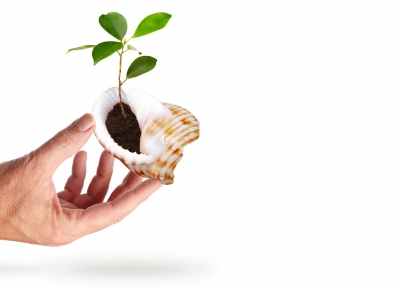
Image courtesy of FreeDigitalPhotos.net
Forward Friday: Thanking the Pace-Keepers
This week we talked about hiking as a spiritual practice toward achieving balance and rhythm in our lives. Today’s Forward Friday is short and sweet:
1) This weekend, take some time to identify people in your life who have helped you keep the pace in your spiritual journey. Let them know how their presence and companionship have affected you.
2) How can you be a pace-keeper in the lives of those around you?
Come back and share your experience in the comment box below.
Forward Friday: Relational Living
Wednesday, I wrote about my purpose in blogging on Holistic Body Theology. I shared that I write this blog because we are not made to be alone. We do not walk this journey alone.
Relational living is a simple, yet vital, element of body theology. This weekend, as you spend time with family, friends, maybe a church community, take the opportunity to be mindful of the way God created us to be together.
Then come back and share your experience in the comment box below.
How did you participate in the body of Christ this weekend?
Why Body Theology?
In an age when we can transplant blood and organs from one person to another in order to bring life; when people’s bodies can be augmented by artificial means; when a person’s sex can be altered; when beings can be cloned; when heterosexual and patriarchal understandings of the body are breaking down, issues of bodily identity worry us and yet in an age when aesthetics appears to have largely replaced metaphysics,
the body seems to be all we have
(even, as [Sarah] Coakley notes, as it disappears on the internet). The body matters and so it is little wonder that a distinctive genre of theology known as body theology has developed. But in truth
Christian theology has always been an embodied theology rooted in creation, incarnation and resurrection, and sacrament.
Christian theology has always applied both the analogia entis (analogy of being) and the analogia fidei (analogy of faith) to the body.
The body is both the site and the recipient of revelation.
– Lisa Isherwood and Elizabeth Stuart, Introducing Body Theology (p. 10-11), emphasis added
Body theology — holistic body theology — is about knowing who we are in Christ and allowing that identity to inform the way we see ourselves, the way we interact with others who share the same identity, and the way we interact with the world as a whole.
Having a healthy relationship with our bodies informs the way we relate to ourselves, to God, and to each other.
When we are free from the lies we receive and internalize, we are able to enter into the fullness of life God has promised and live in the already as whole, redeemed, holy people of God.
I write this blog because I need to be reminded every day that my body is good, has been redeemed, and is an inextricable and irremovable part of the way God speaks to me and uses me in the world for God’s good purpose.
I write this blog because I have met so many other people who struggle just like I do to live a little more in the already and recognize the sacred in ourselves and all around us.
I write this blog because we are not made to be alone. We do not walk this journey alone. Your comments, Facebook messages, and emails continually inspire, encourage, and challenge me.
Keep thinking. Keep sharing. Keep walking with me. Let’s walk together slowly, faithfully into the freedom God has promised.
All You Need Is Love
In the evangelical Christian worldview, we like to have the answers for everything. We like neatness and order. We like clarity. We like black and white truths. We like boundaries. We like to know what is okay and what is not okay, what is allowed and what is not allowed, who is in and who is out.
Bonhoeffer on Community
I’ve written before about Dietrich Bonhoeffer’s expression of intentional Christian community (see here and here). Bonhoeffer described the number one characteristic of Christian community as Jesus as mediator. When we communicate and interact through Jesus, when we view our brothers and sisters through Jesus, we cannot help but act and react, share and respond out of love. When we know our brothers and sisters view us the same way, we cannot help but trust that their actions and communication are out of love as well.
Bonhoeffer also stressed the importance of confessing our sins to one another and forgiving each other as Christ forgives all of us. One of my favorite lines in Life Together is when Bonhoeffer notes that it is difficult to interact with members of our community with anything but love and trust when we hear the confessions of our brothers and sisters and grant them absolution, praying together with them for the forgiveness and blessing of Christ.
The Life of Love
In the Critical Journey, the authors call Stage 6 the Life of Love. (Here’s a great chart reviewing all the stages.) When we reach this stage in our journey, we live, serve, and speak out of our healing, out of the love we have experienced in our encounters with God.
We let go of the questions, the boundaries, the concerns over who’s in and who’s out, who’s right and who’s wrong, and we just love on people. We love people as Christ loved because our agenda is gone. Our wall has been dismantled, and we no longer live in our pain and react out of fear and anger.
It’s no longer of principle concern whether we are warning people about hell or condemning their actions and words. It’s no longer our concern whether people know and love Jesus as we know and love Jesus. Only God knows a person’s heart, and we are not designed to fill in for God in matters of the heart. We are designed to be God’s hands and feet in the world, the body of Christ among the people of God—all of them.
When we reach Stage 6, we no longer worry so much about the doubts and questions of Stage 4. They may still be there, unresolved, unanswered, but they are no longer driving our thoughts and actions. They are no longer overwhelming us. They are rather a reminder that we do not have all the answers, that we do not have it all figured out, and that’s okay. The one thing we are sure of when we reach Stage 6 is what our experience of God is like, that we want to continue moving toward God along with our brothers and sisters, and that we cannot help but share our hope with one another.
Paul’s Theology
Paul’s well-known 1Cor 13 passage is the epitome of the Life of Love. No matter what wonderful things we have accomplished, what honest and intentional lives we lead, if we are still living in Stage 3 where our words and actions are coming out of our duty and our pain and woundedness are still skewing our efforts to serve God, then we are nothing more than a whole lot of loud and ineffectual noise.
I love what Paul says later on in the chapter about growing up in Christ. When we are children, we behave like children, which is right and appropriate for our natural development. Being a child is good—while you are young.
But there comes a time when our natural human development moves us into that wonderful world of responsibility, wisdom, and work called adulthood, and it is in this stage of life that it is no longer right and appropriate to behave like children. Now it is time to grow up, get a job, move into your own apartment, pay taxes and bills, maybe join with another adult and start a new family.
This is natural and right. This is good. Behaving like child is good while you are a child, but behaving like an adult when you have grown up is just as good.
Just as we should not retain our childish interests and behaviors when we are grown, so we should not remain in our childhood or adolescent state of spiritual development. This is another area where the lack of a holistic body theology is evident. We too easily remain unaware of the necessity of spiritual growth along with physical growth. As our bodies grow and change, so should our spiritual lives.
There’s a reason Paul uses the metaphor of a physical human body so often in his letters. The wellbeing of our physical and spiritual selves are intimately related. Thus, they should both be growing. We should pursue spiritual health and growth just as fervently as we pursue physical health and growth.
Too easily we are satisfied with life in Stage 3. We think if we can get people to grow up enough to start giving back, then that’s enough. We’ve arrived!
Never mind people are giving back out of their woundedness. Never mind people are giving back out of their fear and lack of understanding. Never mind people are following blindly after others who are giving out of the same woundedness, fear, and lack of understanding.
It’s no wonder so many Christians leave the Church when they reach Stage 4. In Stage 3 churches, there is no room for questioning and doubting. There is no room for messy, for in-between, for grey.
It’s no wonder so many people view Christians as intolerant, rigid, ignorant, and hateful. Stage 3 is a wonderful and necessary part of the Christian journey, but when we get stuck there, when we fool ourselves into believing we’ve “arrived,” then we become intolerant, rigid, ignorant and hateful. We become everything we say we are against.
We become Pharisees.
But God has called us to more than this. The Christian life is not about the conversion experience. It’s not about the active Christian life.
It’s about the Life of Love. It’s about love—dirty, messy, sacrificial, costly love. It’s about love that humbles itself to take the form of a human being. It’s about love that humbles itself to become obedient to death by the most violent and painful method of execution ever designed. It’s about love that follows after Jesus not because it’s what is acceptable or required but because the call to “come follow me” is irresistible and renewed each day.
Much-Afraid Becomes Grace and Glory
The allegory Hinds Feet on High Places ends with Much-Afraid’s arrival at the Mountain of Spices. She is healed, transformed, and receives her new name, Grace and Glory.
But that’s not the end of the story.
In the sequel Mountain of Spices, Grace and Glory makes her way back down from the Good Shepherd’s home, back down into the Valley of Death where her family lives. She faces the cousins who tortured and taunted her, and she responds to them with love. Her love confuses them! Her transformation inspires the journey of others in the Valley.
What Much-Afraid, Bonhoeffer, and Paul all have in common with the Critical Journey is Stage 6, the Life of Love. It is when we are living and acting out of our healing that we are truly interacting with each other through Jesus as mediator. When we are living the Life of Love, we can confess our sins to one another and forgive each other.
When we live the Life of Love, being in community is a joy. It may not be easy, and it may not be comfortable. It may not even be “acceptable.” It certainly won’t be ideal.
But it will be real. It will be genuine. It will be full of love that casts out all fear, in which we are rooted and grounded, in whom we live and move and have our being, out of whom we speak and act and are the body of Christ.
Having a holistic body theology is great, but it is nothing without love to drive us toward something fruitful, beautiful, honest, holy—without love to drive us toward God, always toward God.
May love be the foundation of our communities, lovely readers. Let us be the beloved Bride of Christ, the Church active in the world and actively loving the world, our body theology lived out among the people of God.

 Holistic Body Theology