Blog Archives
It’s Holy Week! Part 2
Yesterday, we looked at the big picture of the history of God’s relationship to people up to the Day of Atonement. Today, let’s look at the entrance of Jesus into the story.
13. Then Jesus is born, and he is called Emmanuel, which means “God with us.”
14. No longer is God among the people yet blocked from their access. Jesus lives with the people, learns and grows with them, eats and drinks, sleeps, speaks, heals, reprimands, and teaches.
15. Jesus says that those who see him and know him also see and know God.
16. Jesus is anointed at Bethany for his coming death.
17. When the people celebrate Jesus’ entrance into Jerusalem–what we call Palm Sunday–they acknowledge that Jesus is fulfilling the long-anticipated role of the Messiah, the one who has come to save them and restore the original order as God intended.
18. Jesus washes his disciples’ feet as an example of their role in each others’ lives.
19. Jesus breaks bread and passes the cup of wine to his disciples to foreshadow his impending arrest and execution.
20. Jesus prays in the garden with his disciples nearby–by some accounts so fervently that the capillaries break on his forehead and he begins to sweat blood–not only that he might yet be spared his role as the sacrifice for the people’s sins but also that he accepts that role.
This is what I love about the Jesus part of the story of God. Here we see Jesus in his human vulnerability. Though he is fully divine and capable of changing the end of the story, Jesus is also fully human and willingly becomes the final blood sacrifice as the atonement for the sins of the people–this time not only the people of God but all people everywhere throughout the course of history.
The scene in the garden is one of my favorite Jesus moments. We see Jesus at his most intimate, praying to God not for the sake of others but for his own sake. We see the intense struggle between the divine and human in Jesus. This is no small matter, this business of execution and sacrifice. This is not easy or pleasant, but it is worthwhile and shows the extent of God’s love for the people–of Jesus’ love for the people, all people.
Blessed is the one who lays down their life for the sake of a friend. And Jesus has called us friends.
I like to think the blood Jesus sweats during his prayer foreshadows the finality of his sacrifice. Like the blood sprinkled on the Ark of the Covenant in the Holy of Holies on the Day of Atonement, the first drops of Jesus’ blood are spilled in the garden as he struggles to accept his role as the animal sacrificed on the temple’s altar.
But my favorite moment is still coming…
It’s Holy Week! Part 1
One of the most significant elements in body theology is the actual, physical life, death, and resurrection of Jesus. That’s why Christmas, Holy Week, and Easter Sunday are so pivotal. We Christians are who we are because of who Christ is and what Christ did for us. Let’s take a little flash Bible course this week to dig into the significance of what we are about to celebrate.
Sometimes looking at the big picture of the course of biblical history can help us understand what brings us to this moment of Christ’s preparation for death. Here are some key elements of the story of God.
1. God takes evening walks with Adam and Eve in the garden.
2. Becoming aware of their nakedness and feeling ashamed causes them to hide from God.
3. God’s people become afraid of God and ask Moses to speak to God on their behalf.
4. God’s people are afraid even of the glory of God reflected on Moses’ face, so he has to wear a veil until the glory fades.
5. God instructs the people to build the Ark of the Covenant, where God’s presence will be confined among them.
6. The people never touch or open the Ark of the Covenant because it is so holy.
7. The Ark lives in its own tent among them, called the Tabernacle, where the people come to worship God.
8. After Moses, God speaks only to specific people God chooses, usually prophets, kings, or priests. These chosen few share God’s words with the people–who often do not listen.
9. To see the face of God is to die, and even the prophet Elijah–who asks to see God’s face–covers his face with his robe before meeting God at the mouth of the cave.
10. Once God’s people settle down in one place and begin to build houses instead of tents, God instructs King Solomon to build a temple for God to live in.
11. God’s presence is reserved for the Holy of Holies–a small area within the temple restricted from everyone where the Ark is kept, the entrance to which is blocked with a thick curtain.
12. Once a year, on the Day of Atonement, the high priest goes through an elaborate cleansing ritual in preparation to enter the Holy of Holies and sprinkle the blood of the sacrificed animal to atone for the people’s sins. (They even tie a rope around his foot each time in case he dies from the experience of being with God and has to be dragged out to be buried since no one else is allowed to enter the Holy of Holies, even to retrieve a dead body.)
To be continued…
Maternal Language for God
It’s Blast from the Past Week on Holistic Body Theology. Here are some of my theological reflections from a class I took on “Women in Church History and Theology” at Fuller Seminary.
First posted May 9, 2008
Julian of Norwich, Showings
The idea of referring to God as Mother, or even as Mother-Father, has never sat comfortably with me. I cherish the image of God as Father and attribute much of my relationship with God to the understanding that image has fostered. (Note: I’ve come a long way since first writing this post.)
Nevertheless, I felt no discomfort when reading Julian of Norwich’s Showings. Perhaps that is because it was not my first reading of her revelations using such prevalent maternal language and imagery when referring to God and especially to Jesus. Or perhaps I was not uncomfortable because she is not agenda-driven in her writing. Though Julian often refers to Jesus as our Mother, she continues to refer to him as “he” and just as often pairs the parental reference as God our Father and God our Mother.
Particularly, Julian is writing in explication of sixteen visions she had of Jesus revealing something of himself to her. If her explanations include maternal imagery in conjunction with paternal imagery, I am not upset by it but appreciate what her revelations add to my understanding of God in the role of tender nurturer.
Hildegard and Hadewijch
Likewise the use of maternal imagery in the writings of Hildegard and Hadewijch, as recorded by F. Gerald Downing, does not bother me for similar reasons. These women are not pushing an agenda, trying to force out the man in favor of the woman, or trying to emasculate men or make God a woman. They are simply recording their own experiences of personal encounters with Jesus, using the kind of language and imagery that is both appropriate to their own life experience and to the way in which Jesus chose to reveal himself to them.
As Downing notes, “Hadewijch enjoys a fully tactile (and indeed erotic) sensation of being embraced by him [Jesus] during a mass,” and Julian’s less sexually-charged image of “Christ’s motherly suckling care” is just as intimate and personal a description (429). Downing notes also that the images these women draw on in their writings are all scriptural and traditional sources available but not utilized by other theologians like Anselm and Thomas Aquinas (430).
This kind of imagery, Downing argues, leads to an understanding of “the actions of Father, Son, and Spirit towards us [as] personal, specific, and interconnected, culminating in the Incarnation of the Word and the response the Spirit enables” (433). The point is not a triumph of feminine imagery over masculine but of personal, bodily imagery of a real and experienced relationship with God over impersonal, abstract imagery of a distant God who is perfect but inaccessible.
Marriane Meye Thompson, “Speaking of God”
Marianne Meye Thompson writes in her article “Speaking of God” that it is important not to lose one’s audience for the sake of pushing a theological conviction that the way has not been prepared for (6). What is the help in praying to God as Mother before a room full of people who have no idea what you are doing?
But Julian teaches her readers, in the midst of her sensuous and bodily language, how to imagine God (and particularly Jesus) as relating to us not just like a Father but like a Mother as well: “for God’s fatherhood and motherhood is fulfilled in true loving of God; which blessed love Christ works in us” (chapter 60). I think Thompson would agree that reading Julian out of context would be detrimental to an unprepared audience, but Julian’s unashamed use of maternal language (“[Jesus] feeds us and nurtures us: even as that high sovereign kindness of motherhood [does],” chapter 63) in general draws no particular criticism.
Paul Jewett, The Ordination of Women
Paul Jewett would probably also agree that Julian’s use of maternal language is appropriate because they are just metaphors. She still uses the masculine pronoun “he” to refer to each of the three persons of the Trinity—“for he [Jesus] is our Mother, Brother, and Savior” (chapter 58, emphasis added)—which is the only thing Jewett is concerned about.
She also does not use maternal language to the exclusion of paternal language, so Jewett would not be too concerned about her usage but would probably praise her ability to integrate these images so smoothly into her descriptions. In fact, Jewett actually declares that “the church needs to teach that God is as much like a mother as like a father” (139), and thus Julian does.
Is feminine imagery for God “un-biblical?”
Thompson notes that while there is a “predominance of male imagery for God” in the Bible, it is also true that “the Bible does use feminine imagery for God” as well (2). Since “much of our language for God is metaphorical and analogical” (1), there is no grounds for the claim that it is “unbiblical to picture God in analogies from the sphere of women’s experience” (3). What Julian does in her writing is provide a balanced analogy of the parental relationship, both that of the Father and the Mother whenever she deems appropriate. In that way, she is able to elevate from a “second degree” status the part of the woman in the image of God (5).
Jewett echoes Thompson in the acknowledgement that women have been demeaned in the church, relegated to a secondary or “human-not-quite-human” status in relation to men (119). Since God has revealed himself in masculine language through the biblical authors, and since theologians have followed that tradition in referring to God, Jewett argues that it is appropriate to use masculine language, especially the masculine pronoun “he,” to refer to God (123).
Nevertheless, it is important to educate Christians that while a masculine pronoun can be more appropriate in some contexts than a feminine one, that usage must be balanced with the recognition that “God so transcends all sexual distinction as to be neither male nor female, yet appropriately likened to both” (124).
Julian does just that: likens God to both a Father and a Mother, “as truly as God is our Father, so truly God is our Mother” (chapter 59). Ultimately, Jewett asserts, God has revealed himself not as masculine but as personal, the “personal Subject, saying I am who I am” (127), so while masculine language about God is appropriate because of tradition, “we must not continue to think of the male as supremely the bearer of the image of God” (128).
Julian helps us understand God in feminine terms as well with her many references to Jesus as the suckling mother who cares for his children: “The mother may give her child suck of her milk, but our precious Mother Jesus feeds us with himself” (chapter 60).
A Woman’s Place
It’s Blast from the Past Week on Holistic Body Theology. Here are some of my theological reflections from a class I took on “Women in Church History and Theology” at Fuller Seminary.
First posted April 20, 2008
First impressions of Ephesians 5 and 1-2 Timothy
After my initial reading of Ephesians 5 and 1-2 Timothy, I conclude that women led varied lives depending on their economic and marital status. In Ephesians, married women are encouraged to submit to the authority of their husbands as they would to Christ and to respect their husbands as part of the union of two into one flesh.
In the Timothy letters, the emphasis is on the widows. The young ones are encouraged to get remarried so that they will be too occupied with household tasks to fall into gossip and idleness. The old ones are encouraged to mentor the younger ones and can only receive aid if they have, in a sense, proved themselves worthy by a lifestyle of service, submission, and obedience. Concerning corporate worship, women regardless of marital state are encouraged to be modest, submissive, quiet…and fertile? I never have discovered how to interpret 1 Tim 2:15.
My impression, then, of the lives of women at this time is that women were expected to submit to male authority, behave with modesty and decorum, and serve with hospitality as part of running a good household. They were not expected to take up authority themselves, abandon or neglect their duties, or behave or dress indecently.
But the fact that women are being put in their place in some of these passages implies that some women perhaps were teaching or asking questions or neglecting household tasks or gossiping among themselves or any number of other expressions of their new-found freedom in Christ that shocked and appalled observers both within the Christian community and outside of it. There seems to be an effort in the letters to recall women to (or to remind them, lest they forget, of) proper etiquette that would bring honor to both themselves and their husbands or families and would keep them from bringing the shame of the world on the early church as it struggled against the world’s accusations and persecutions.
A Woman’s Place, metaphors, and symbolism
Osiek and MacDonald, in A Woman’s Place, concern themselves largely with cultural and social context in exegeting these texts and other references to women in the New Testament. Interestingly, the authors spend time exegeting the Ephesians text as an extended metaphor for Christ and the church, insisting that the metaphor would have been clear to the early readers or listeners. They label the passage “an important socio-political statement” rather than a concerted teaching on the roles of men and women in marriage (120).
The use of marriage is symbolic, not necessarily prescriptive, and certainly reflects an ideal that cannot be realistic in our fallen world (125). Moreover, the authors argue that the text is a central pivoting point for the themes of the letter, marriage serving as a useful conventional metaphor (121). The text turns the convention of marriage on its head: “The husband is head of his wife as Chris is head of the majestic and heavenly church. Human ‘wifely’ behavior within the church becomes an indicator of the community’s dislocation as an apparently conventional but nevertheless heavenly body” (127). Thus, in taking the passage at face value, we miss the point.
Literal interpretation vs. historical-critical method
Growing up in the evangelically conservative South, I was taught as a general rule that the Bible was to be taken literally, its texts at face value, and its every word as the infallible authority of God. Now, I believe in the authority of the Bible, but its literal interpretation has fallen short of my understanding of who God is and what it means to be a child of God.
I appreciate Osiek’s and MacDonald’s effort to take a more holistic approach to the texts by both reading them in conjunction with each other and by considering at length the cultural context of the day as a lens through which to interpret the issue of women. They broaden the older scholarly perspective by including what the text does not say, what has been left out or assumed concerning the daily lives of women.
The metaphorical interpretation is an interesting approach to the problem of Ephesians 5. I am not sure that I could hold an audience long enough to explain such a position with those who expect a quick, two-punch sound bite or proof text. Nevertheless, the interpretation is a useful reminder that texts should not always be taken at face value or as prescriptive when they are just as likely meant to function as literary or as descriptive.
This approach, both to the Ephesians text and in general, does make a significant difference in the reading of scripture because it (at the risk of using a buzz word) liberates the text from its pigeonhole and consequently liberates women from relegation to the older understanding of “submission” and “authority” as ordained by God to keep women under the proverbial thumb of their men.
Forward Friday: What’s Yours?
This week I reflected on four aspects of body theology that are important to me: gender, sexuality, community, and body image.
This weekend, try reflecting on one aspect of body theology that is important to you. Choose from the list below or make up your own. Share what you reflected on in the comment box below.
- identity
- image of God
- incarnation of Christ
- physicality
- sexuality
- body image
- media literacy
- cultural discernment
- community
- body of Christ
- equality
- service
- social justice
- creation care
- spirituality
Reflections on Body Theology: 10 Realities of Christian Community

1) It’s not good for us to be alone.
2) We were created for relationship.
3) We need physical touch, eye contact, and attention to bond with others.
4) Unsafe community is toxic at the least and abusive at the most.
5) We react out of fear or jealousy when we feel unsafe or ashamed.
6) We find healing–physical and emotional–through safe, consistent community.
7) We won’t be honest about our struggles when we don’t feel safe.
8) True, safe, trusted community is organic and cannot be contrived.
9) Community is not Christian unless Jesus is the mediator.
10) There is no perfect community.
Reflections on Body Theology: 10 Things I Appreciate about My Sexuality

1) The way getting my period routinely reminds me of my ability to create a new human being inside my body
2) The ability to experience such unique pleasure and intimacy with another human being
3) The give-and-take involved in shared sexuality with another human being
4) The ability to emotionally bond with another human being through a physical act
5) How our sexual nature unites all humanity in basic human experience
6) How my sexual nature unites me with the sexual nature of Christ who took on human form to be with us
7) How sexual experience–like eating and drinking, hiking, or even bathing–can be at once physical, emotional, relational, and spiritual
8) How sexual experience–like contemplation–engages all my physical, emotional, and mental energy
9) The way sexual experience is both a release and a gain
10) The way sexual experience is creative in its possibility for new life–figuratively and literally
Conversation: Are You an Ender or a Starter? Part 4
If you missed them, read part 1, part 2, and part 3 first.
More than Presbyterian
When I met my husband, I had already graduated from seminary. During one of our early conversations about our faith journeys, he asked me if I was still Presbyterian. I thought about it for a moment, and then I said, “Yes, but I’m more than Presbyterian now.” He thought my answer was funny, and he still kids me about it, but I was serious.
My roots will never stop being Presbyterian. I will never forget where I came from, and I keep the best of my Presbyterian upbringing with me now. But I am also a little Charismatic, a little Episcopalian, a little Vineyard, a little Emerging, a little Non-denominational, a little Buddhist, a little Mystic, a little Catholic, and a little I-don’t-know-what.
I’m in the garden now. My roots are growing down deeper. My leaves are spreading wider. My buds are blooming. I’m adding my rich and unique beauty to the variety of the garden. I am learning to live in harmony with the different plants surrounding me. We are all growing together, and it is only together that we can call ourselves a garden.
Remember when Rachel Held Evans called the Bible a conversation-starter? I think she was right. What kind of garden would we be if we get rid of all the variety and uniqueness and try to make the whole garden look like us? We’d be a garden overtaken by weeds. Weeds put a strangle-hold on their fellow plants and force them to submit to only one expression of plant life. Good gardeners uproot the weeds to allow more space for all the plants to grow freely and fully as they were meant to.
Let’s stop using the Bible to end conversations. Let’s stop using our swords to wound and instill fear. Let’s be conversation-starters. Let’s allow the different voices of scripture, of history, and of today to shape and inform the conversation. One of my seminary professors once defined theology as God-talk. Let’s allow our theology to be a work-in-progress, a work toward discovering together the truth about God and the truth about ourselves because of God.
Boundaries and the space between
I read about a study once where a community member drove by her child’s elementary school and noticed all the kids hanging on the fence at the edges of the playground. Concerned that the fence was holding her child back, she had the school remove it. Immediately, the children’s behavior changed. They began to congregate in the middle of the playground, fearing the insecurity of the edges they once safely explored because the boundaries were gone.
I’m not advocating that we abolish boundaries and play with an anything-goes mentality. We all need boundaries to feel safe and to bravely explore the fullness of the space we have been given. Without any boundaries at all, we would be like the children gathered in the middle, afraid to explore and play in the in-between.
But we won’t know where the boundaries are if we don’t spread ourselves out and grow into the space we’ve been given. Through conversation, we can explore and experience that space together and learn what it really means to be the body of Christ.
I used to be a conversation-ender, but I’m a conversation-starter now. Which one are you? Share your thoughts in the comment box below.
Guest Post: 3 Must-haves for Lent: Part 1
My friend Jenn Cannon has graciously agreed to share her experience of fasting during this Lenten season and its impact on her body theology. You can find more of her writing here.
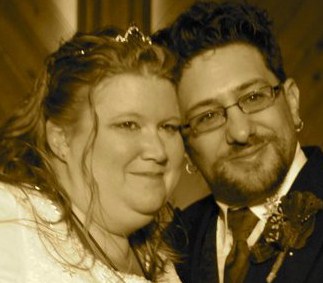 I am a musician, a photographer, a theologian, a customer service rep. I am a wife, a stepmom, a sister, a daughter, an aunt. But mostly I am a child of God striving to live my crazy life the best way I know how. These writings have been born from my journey back to health that I started in June 2011. At that time, I weighed over 300 pounds and needed to lose at least half my weight to be considered in a healthy range. Since then, I’ve lost almost 50 pounds through adjusting my diet and adding exercise. The surprising side effect is the emotional changes that go along with getting healthy – and that is what has prompted me to begin to write.
Last week, Christians around the globe marked the beginning of the season of Lent. This season of 40 days (well, really 46) of preparation and repentance is observed so that we can prepare our hearts and minds for the coming of Holy Week and Easter. We intend to spend these 40 days focused on God and Christ and the upcoming sacrifice that saves us.
At least – that’s the intent.
Lenten Fasting
Historically, Lent has included a fast of some sort: abstaining from certain foods, from all food, from bad habits, from sex… The Lenten fast has taken so many different forms over the years. In more Orthodox congregations, the fast is prescribed and required (with some dispensations granted for the extremely ill or weak). In many Protestant churches, the fast is voluntary (at most) and unknown (at least). Some congregations don’t observe Lent at all.
What then does this Fast, this abstaining, really mean? What is the purpose and how do we observe it correctly? And really – what does fasting have to do with Body Theology at all?
The Lenten practice was originally a 3-part one: prayer, fasting, service. The idea is that one practice without the other 2 is incomplete. So – if we choose to fast simply to fast, we miss the mark. The whole point is to prepare ourselves for Christ’s sacrificial death on the cross and life-giving resurrection. If we focus ONLY on the fast, we miss the rest of the preparation.
Lenten Prayer
Fasting without prayer is simply denying ourselves. If we use the popular example of food – we are simply denying ourselves sustenance, and missing the point. Prayer – focus on GOD – is crucial. Without it, we are perhaps using the fast in a multitude of incorrect ways: pride at our will or self-control; attempting to manipulate others (as in the case of a hunger strike); proof of our own piousness; and many others. And physically, denying ourselves a certain food can enhance the desire for it – to such an extent that it could lead to a binge. Unhealthy AND ungodly.
When we add prayer – or scripture reading or any other discipline that focuses our attention on God instead of ourselves – we immediately rescue the Fast from the worldly concerns and it can become, again, a part of worship. We can worship through our physical acts, provided our hearts and minds are in the right place.
Lenten Service
As we worship God physically and spiritually, we must remember that we are called to love our neighbor, as well. When pressed by the Sadducees to name the greatest commandment in the Law, Jesus answered:
“Love the Lord your God with all your heart and with all your soul and with all your mind.” This is the first and greatest commandment. And the second is like it: “Love your neighbor as yourself.” All the Law and the Prophets hang on these two commandments. ~ Matthew 22: 34-40
Christ didn’t make a distinction between loving self, loving God, and loving others. They are all tied together into one answer. The Greatest Commandment. And so, too, should our Lenten practice be….
Come back tomorrow for the thrilling conclusion!
We’re Throwing a Healing Party–and You’re Invited!
It is impossible to separate the way we feel about ourselves from the way we feel about one another. – Wuellner
We’ve been touring Flora Slosson Wuellner’s Prayer and Our Bodies last week and this week, looking for insights to encourage our pursuit of holistic body theology. Just as body theology is about not only our own bodies but also what we do with them in the world, so Wuellner’s book encourages prayer not only with our own bodies but also with our community body. She writes, “The nurture, inclusiveness, and sensitivity which we try to bring to our own bodies is precisely the same nurture, inclusiveness, and sensitivity we are asked to bring to our community body.”
Chapter 8: The Healing and Renewal of Our Community Body
Being in community with others is hard work. As we learned through our discussion of Bonhoeffer’s ideas about community, prayer with and for one another is one of the best ways to come to love and respect each other. As Wuellner puts it, “The health of a community body depends so utterly on its tenderness and its honor toward all its members.”
A spiritual life, and a body theology, experienced entirely as an individual is deficient. We are not living out our participation in the incarnation of Christ if we are not participating in community:
It is in community that our true faith is revealed and tested. Just as our spirituality must be experienced in our personal bodies, so must it also be experienced in our community bodies. If our spirituality has become merely an individualistic exercise–if our whole self (body, emotions, spirit) is not part of our community context–we have missed the meaning of the incarnational life.
Wuellner acknowledges that it’s easy to overlook the difficult members of our community–the homeless, the disabled, the emotionally dependent: “How often is our politeness merely a way of distancing ourselves from honest encounter? If we learn honesty within our own bodies and hearts, can we at last begin to learn it with one another?”
She describes healthy community as having “not only nurture for its members but also openness towards new members, new ideas, new ways of living. A healthy family is not a closed circle; it reaches beyond itself in interest and concern or its spirit will die.” We cannot be exclusive and be a truly healthy community where “all are equally heard, valued, and nurtured.”
How often are we divided over issues of race, gender, and sexual orientation? How often do we hold grudges against past offenders, despise those who have wounded us (either individually or communally), and refused to be reconciled? Is this what it means to be the body of Christ?
What would it look like if we threw a healing party? Everyone in our community could come with their individual gifts and strengths, and we could celebrate being the body of Christ together. Then, before we leave the “party,” we could pray together for our community to be healed and become whole. Is there any better party favor than healthy community?
We can achieve healthy community, Wuellner suggests, through communal prayer:
Let us in our churches, prayer groups, and personal prayers begin with boldness to explore in depth these new frontiers of prayer for the radical healing of our family bodies, our church bodies, our racial, national, professional bodies.
If you and your community are ready to experience healing and wholeness as the body of Christ, I encourage you to throw a healing party. Begin to pray–individually and communally–for God’s healing to come. Wuellner offers this guidance as we enter into communal prayer:
- God is the healer. We are to be the transmitters, not the generators, of the healing light and energy.
- Face our true feelings about the person or the group or the situation. The feeling itself will never be a block to God’s work of healing if it is faced. We admit what we feel to God and let God do the loving.
- Our prayer is not meant to be either diagnostic or prescriptive. There will be changes, but they are not always what we expected, and they do not always come at the time we expect.

 Holistic Body Theology