Blog Archives
Conversation: Are You an Ender or a Starter? Part 1
I used to be a conversation-ender.
Growing up in the South, I was immersed in a conservative environment, both religiously and politically. I grew up Presbyterian, in a long bloodline of Presbyterians past, which is a denomination that puts great emphasis on knowledge and scripture. I grew up with sword drills, and I was a quicker draw than most. I knew all the Bible stories and could answer all the Sunday school questions.
I wouldn’t trade that upbringing. I have deep respect for my Presbyterian roots. They are strong and deep. I still maintain most of my early Presbyterian theology and appreciate my early exposure to a love of the word of God.
What I would trade, however, is how I used that word of God. I was quick to draw my sword and fight, and I fought to draw blood. I fought to win.
Black-and-white theology
The appeal of a black-and-white theology is that there is a straight answer for everything. There are neat categories. There is order, and we Presbys love us some order. There is comfort in knowing what is right and what is wrong, who is in and who is out, where the line in the sand is and which side we’re on.
The problem with black-and-white theology is that it is fear-based. Fear of complication, wrong answers, messy categories, disorder. Fear of not knowing, not being sure, or maybe just not being right. Fear of being disagreed with. Fear that there could be more than one valid answer. Fear of losing that comfort and security.
The good and bad of boundaries
Having clear boundaries makes us feel safe. That’s a natural human trait. We’re designed to want and need boundaries. Boundaries are good and necessary.
But whose boundaries?
If boundaries are good and necessary, then the more boundaries we have, the better off we will be, right? We will be safer and more comfortable. We will be more sure. More right. So we create more and more boundaries for ourselves, encroaching on the space within. Little by little, we sacrifice our safe space until we find ourselves…in prison!
Enter Jesus. Enter truth. Enter freedom. Enter fullness of life. Enter fulfillment of the law. Enter space.
The best boundaries we can live by are God’s boundaries, not ours. But how do we know what God’s boundaries are? Who’s to say who’s right and who’s wrong, who’s in and who’s out, who’s free and who’s in prison, whose space is God’s space?
Better to be safe than sorry, right?
Better slap down those who threaten the safety of our comfortable boundaries, right?
Better end the conversation now than risk stepping out into all that space, right?
Right?!
To be continued in tomorrow’s post…
Forward Friday: 4 Ways to Pray (Naked)
In keeping with tradition, we’re wrapping up this week’s theme on praying naked with four suggestions. Choose the one that best fits, and come back to share your experience.
1) Pray in the bathtub (centering prayer): As you remove each article of clothing, remove along with it some distracting thought. Allow the water surrounding you to remind you of the movement of the Holy Spirit within you. Don’t be discouraged by distracting thoughts, but allow your nakedness to remind you of your purpose, and continue to set distractions aside. Once you are centered (this can take anywhere from 15-30 minutes, so don’t rush yourself), allow God to speak to you. This might take the form of a recurring distracting thought, an old emotional wound, a nagging memory of an unreconciled relationship, a line of music or verse of scripture, or anything else. Whatever emerges, take it to God and experience God’s love, healing, forgiveness, acceptance, and renewal.
2) Pray in your room (intercessory prayer): As you undress, be aware of the vulnerability of your naked body. Allow that vulnerability to guide your conversation with God. As you become more comfortable with your nakedness–alone in your room–allow yourself to experience compassion for those whose vulnerability is taken advantage of. If that is not a natural experience for you, read Stacey’s post as an example, and ask God to open your eyes not only to your own needs but also to the needs of others.
3) Pray semi-covered (inner healing prayer): For those of you who have experienced trauma and may be triggered by the vulnerability of your nakedness, try undressing and then covering yourself with a towel, robe, or blanket. Allow the covering to be an intentional reminder of God’s protection over you. Read Gen 2:25, slowly, aloud, once every five minutes for 30 minutes. Between readings, sit quietly and allow God’s truth about your body to take root. As any shameful memories arise, offer them to God. Ask God to enter those memories with you and show you the truth about yourself. If you’re feeling too vulnerable at any point, try putting some of your clothes back on, one article at a time. Allow the act of getting dressed to be an intentional reminder of God’s protection over you.
4) Sleep naked (resting prayer aka letting-God-do-all-the-work): For those of you who find the whole conversation about praying naked to be uncomfortable or ridiculous (or if the above suggestions just aren’t for you), try simply sleeping naked tonight. Again, as you undress, be mindful that you are uncovering yourself before God. Ask God to enter your experience and show you something new. (If you sleep with a partner, be sure to warn him or her that you are sleeping naked tonight as a spiritual exercise, not as an invitation to sexy time. This is your chance to experience your sexuality within yourself and with God. Have sexy time tomorrow night.)
What Laywers, Parents, and Carpenters Have in Common
I had planned to write a post for today about ways to pray other than naked. (If you missed Stacey’s guest posts on praying naked this week, you can read them here and here along with my introduction.) But I got caught watching a video of Eugene Peterson’s recent talk “Practicing Sabbath” at Q with Dave Lyons, and I couldn’t get this excerpt out of my mind.
Nothing happens when you pray, you think. There’s nothing in prayer that gives you any satisfaction in terms of having accomplished anything. So learning to pray is learning to not do in the awareness that God is doing something and you don’t know what it is at that moment.
When people ask me how to pray, sometimes I’m tempted to tell them what I do that first hour in the morning [here he is referring to his daily devotional time of reading scripture and praying the Psalms], which I’ve done since I was 15. But I realized at one point, that’s not so. When I leave my study, close my Bible, that’s when I’m praying.
I pray all day. Prayer now is something that suffuses my life. Most of the time when I’m praying I don’t know I’m praying. Later on I realize I have been. But to get to think about prayer in a little more comprehensive way as the interior life that the Holy Spirit is breathing in us every time we take a breath suddenly changes prayer from being a practice like you practice the piano to being a practice like you practice being a lawyer or practice being a parent or practice being a carpenter. You’re doing it when you don’t know you’re doing it.
Don’t you love it when you’re around a really skilled craftsperson? They just do it beautifully and economically and you realize: that man is carving something, and he doesn’t even know he’s carving. He doesn’t think: “I’m carving. Isn’t this wonderful? I’m carving!”
My goal–and the witness of a lot of people I’ve read through the centuries–is not to pray in such a way that you’re conscious of praying but to live a life suffused by prayer so that your life becomes a prayer. But that’s not the kind of thing you can write a book about. It’s only a thing you can live and see other people live.
If “play” and “pray” don’t work together, both are diminished. That’s why both are necessary. Otherwise, they become duties that you have to perform.
Whether you pray by getting naked, going for a hike, reading scripture, interceding for others, contemplating or meditating, or any of the many, many other ways to pray–let prayer suffuse your life so that you experience the inspiration [read: breath] of the Holy Spirit with every breath.
How do you pray? Share your experience in the comment box below.
Bathtub Spirituality: Getting Naked Before God
I’ve always hated showers. Give me a glistening white tub full of sudsy warm water, candles on the ledge, and a glass of red wine. That’s the way to be clean.
Showers are for the hurried, getting clean all in a rush of water hurtling down and straight into the drain–like getting caught in a downpour and giving up any hope of finding shelter before you’re soaked. Showers are for standing; you’ve got someplace else to go–and you’re going to be late!
Baths are for lingering, resting, enjoying. No agenda. No interruptions. Only peace. Warm, scented, slightly alcoholic peace. Taking a bath is my favorite form of centering prayer.
I’ve had some very profound moments, naked among the bubbles and salts and dripping faucet. Moments when God speaks, when my heart breaks, when I am listening. Moments of forgiveness, release, understanding, wonder. Moments of experiencing God’s tenderness, mercy, lovingkindness.
In these moments I feel like nothing separates me from God. I can lie back in the water until my ears are covered and my hair swishes like seaweed around my head and feel held, encompassed, hemmed in. I can stretch my legs one over the other, stick my big toe in the leaky faucet and examine myself exactly as God knit me together–my skin softened by the soap and salts and getting wrinkly from the long soak.
I can be fully myself in these moments, alone in the sanctuary of my white bathtub. In these private moments I share my most intimate, sacred self with the Creator. No cathedral, chapel, prayer garden, or monastery compares to the holiest of holies that is my tiled bathroom–with the steamed-up mirror, flower-shaped bathmat, and humming air vent that occasionally creaks when one of the screws comes loose.
That is my sacred space. That is where I am most spiritual–and most physical. That is where I experience God–in the bathtub.
This week I’m honored to host a beautiful moment in my dear friend Stacey Schwenker’s journey through experiencing her sexuality as a single person. She’ll be sharing her experience of getting naked before God tomorrow.
Until then, how do you get naked before God?
Performing Open-Heart Surgery
Since December, I have seen four different doctors and had ten separate appointments. I have undergone multiple tests and procedures–all to rule out causes of my unexplained fatigue. Now the doctors are at a loss. Perhaps I have chronic fatigue or some other nebulous disorder or syndrome. Such things are difficult to diagnose. But I think I know the real cause of my fatigue.
God as Surgeon
My spiritual director once said that experiencing God’s healing is sometimes like having a surgeon perform complicated, invasive procedures while we are under anesthesia. When God is doing this kind of healing, she said, it would be too painful and scary for us to be awake and aware of God’s work. So we are put to sleep. Then when we awake, our bodies are exhausted and need rest to complete the healing process the Surgeon began in us.
At the time, her analogy didn’t really resonate with me. I was in so much emotional and spiritual pain that I did not know how to let go and rest, allowing God to do the hard work. I wanted God to show me what needed to be done so I could do the work myself, understand exactly what was happening, and remain in control.
Looking back, my attitude was as ridiculous as my telling a doctor I wanted to perform my own open-heart surgery. Not only do I have no medical training, but I also would not be able to survive the experience of cutting through my own flesh. The pain would be too great, and the procedure would be too complicated. If I needed open heart surgery, I would have to trust the surgeon to do a good job. I would have to be anesthetized during the procedure, and then I would have to rest and allow my body to recover afterward.
God as Teacher
Ever since I completed my degree in 2008, God has been teaching me (ironic, no?) how to rest. I have slowly been learning how to let go of my over-active drive to DO–to be an achiever and to be productive. I’ve been a terrible student, I must admit, but God is an ever-patient teacher.
Despite my resistance, God performed a great work in me in the past few years, one that I am still not completely sure I understand or know the effects of. Now, my surgery is over. I have left the operating room, and the anesthesia has worn off. The hard work is done, and I’m awake!
Physical and Spiritual Rest
My body has been telling me for months that I needed to rest, and I just could not understand why. After stumping half the doctors in this town, I think it’s safe to say that it’s time to give up BEING AWAKE. The surgery may be over, but the spiritual healing process has only just begun.
Now I must endure a new season of recovery. I must allow myself to feel the effects of God’s work in me and give myself time to adjust and heal. That is how I choose to spent this season of Lent. I’m giving up my DO-ER spirit and allowing God to complete the good work begun in me.
So for Lent, I will sleep as many hours as I can. When I am awake, I will rest in bed as much as I can. My fast may not look very difficult or spiritual, but it is both. I am relinquishing control (again) and allowing God to take care of me–mind, body, and spirit.
Guest Post: 3 Must-haves for Lent: Part 2
My friend Jenn Cannon has graciously agreed to share her experience of fasting during this Lenten season and its impact on her body theology. If you missed it, check out Part 1. You can find more of her writing here.
Many people, in modern Christianity, have taken the idea of a fast during Lent and tried to turn it into a positive action. Instead of simply abstaining from certain foods, people are opting to try another way to express the same idea without the physical side-effects. As an example: my former pastor gives up his morning Starbucks and all fast food and then donates the funds that he has saved to his favorite charity.
Unhealthy Fasting
As I have journeyed to get healthier in the last 8 months, I have found that I cannot outright deny myself a certain food without the danger of a binge looming on the horizon. If I tell myself I cannot have chocolate for 40 days (or 46 depending on how you count it), I will most certainly have a meltdown and gorge at the end when I finally allow myself the chocolate – or I will be frantically trying to find something else to fill that need.
Either way – I lose sight of the meaning of the fast, and also do myself more harm than good. Many people who are journeying back to health will tell you the same horror stories – fasting from any certain thing is a recipe for a binge.
Healthy Fasting
So I have learned to eat things in moderation. Great. But then what am I supposed to do about Lent? If I want to participate in the spiritual journey of preparing myself for the coming sacrifice of Christ, what then can I do instead of giving up meat (which I already eat very little of) or chocolate (again, a minor part of my diet and not really a sacrifice) or anything similar?
I am fasting from laziness. Fasting from sitting on my butt. My Lenten practice, this year, is to commit to some form of intentional exercise for at least 30 minutes every day. I am choosing to observe Sundays as the mini-Easter that they are, and so are not part of the fast.
So – that is my physical piece. But, as a Lenten practice, it is fruitless and self-serving unless I add in the other aspects of prayer and service. So, my prayer (or God-focus) part of Lent is to read Scripture more regularly, pray while I’m on the treadmill, and change the music I listen to to help keep my thoughts centered on God while I’m walking. As for service, I am always looking for the people who cross my path that I believe God sent to me. Also, my discipline for service will take the form of writing.
Writing as Spiritual Discipline
I have a lot going on in my head as I journey back to health – and with nudging from good friends (like Laura) – am realizing I have much to say and share as I do. So I will be writing – intentionally – during the full season of Lent.
My writing is intended to help others understand this journey of getting healthy, encourage those who are struggling with their own health, and – selfishly – to help me process some of the stuff I need to think about – specifically regarding my self-image.
Join the Conversation
So have you thought about what you’re giving up for Lent? Do you have a reason for your choice? And how does your personal choice (Self-focus) tie back in to the other two aspects of Fasting: God-focus and Others-focus? Leave a comment in the box below to share your journey this Lenten season.
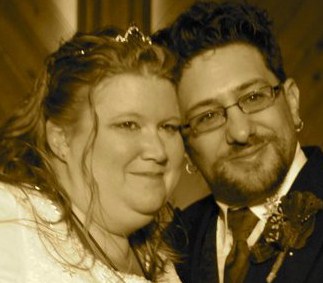 I am a musician, a photographer, a theologian, a customer service rep. I am a wife, a stepmom, a sister, a daughter, an aunt. But mostly I am a child of God striving to live my crazy life the best way I know how. These writings have been born from my journey back to health that I started in June 2011. At that time, I weighed over 300 pounds and needed to lose at least half my weight to be considered in a healthy range. Since then, I’ve lost almost 50 pounds through adjusting my diet and adding exercise. The surprising side effect is the emotional changes that go along with getting healthy – and that is what has prompted me to begin to write.
Guest Post: 3 Must-haves for Lent: Part 1
My friend Jenn Cannon has graciously agreed to share her experience of fasting during this Lenten season and its impact on her body theology. You can find more of her writing here.
I am a musician, a photographer, a theologian, a customer service rep. I am a wife, a stepmom, a sister, a daughter, an aunt. But mostly I am a child of God striving to live my crazy life the best way I know how. These writings have been born from my journey back to health that I started in June 2011. At that time, I weighed over 300 pounds and needed to lose at least half my weight to be considered in a healthy range. Since then, I’ve lost almost 50 pounds through adjusting my diet and adding exercise. The surprising side effect is the emotional changes that go along with getting healthy – and that is what has prompted me to begin to write.
Last week, Christians around the globe marked the beginning of the season of Lent. This season of 40 days (well, really 46) of preparation and repentance is observed so that we can prepare our hearts and minds for the coming of Holy Week and Easter. We intend to spend these 40 days focused on God and Christ and the upcoming sacrifice that saves us.
At least – that’s the intent.
Lenten Fasting
Historically, Lent has included a fast of some sort: abstaining from certain foods, from all food, from bad habits, from sex… The Lenten fast has taken so many different forms over the years. In more Orthodox congregations, the fast is prescribed and required (with some dispensations granted for the extremely ill or weak). In many Protestant churches, the fast is voluntary (at most) and unknown (at least). Some congregations don’t observe Lent at all.
What then does this Fast, this abstaining, really mean? What is the purpose and how do we observe it correctly? And really – what does fasting have to do with Body Theology at all?
The Lenten practice was originally a 3-part one: prayer, fasting, service. The idea is that one practice without the other 2 is incomplete. So – if we choose to fast simply to fast, we miss the mark. The whole point is to prepare ourselves for Christ’s sacrificial death on the cross and life-giving resurrection. If we focus ONLY on the fast, we miss the rest of the preparation.
Lenten Prayer
Fasting without prayer is simply denying ourselves. If we use the popular example of food – we are simply denying ourselves sustenance, and missing the point. Prayer – focus on GOD – is crucial. Without it, we are perhaps using the fast in a multitude of incorrect ways: pride at our will or self-control; attempting to manipulate others (as in the case of a hunger strike); proof of our own piousness; and many others. And physically, denying ourselves a certain food can enhance the desire for it – to such an extent that it could lead to a binge. Unhealthy AND ungodly.
When we add prayer – or scripture reading or any other discipline that focuses our attention on God instead of ourselves – we immediately rescue the Fast from the worldly concerns and it can become, again, a part of worship. We can worship through our physical acts, provided our hearts and minds are in the right place.
Lenten Service
As we worship God physically and spiritually, we must remember that we are called to love our neighbor, as well. When pressed by the Sadducees to name the greatest commandment in the Law, Jesus answered:
“Love the Lord your God with all your heart and with all your soul and with all your mind.” This is the first and greatest commandment. And the second is like it: “Love your neighbor as yourself.” All the Law and the Prophets hang on these two commandments. ~ Matthew 22: 34-40
Christ didn’t make a distinction between loving self, loving God, and loving others. They are all tied together into one answer. The Greatest Commandment. And so, too, should our Lenten practice be….
Come back tomorrow for the thrilling conclusion!
I Gave Up BEING AWAKE for Lent!
I’m excited to have my friend Jenn Cannon guest posting this week. She’s going to be sharing some of her journey with fasting and healthy living in light of the Lenten season. Before I turn my blog over to her, I thought I’d prime the pump, so to speak, by sharing some of my thoughts on Lent and body theology.
I never knew much about Lent growing up. My church didn’t really follow the church calendar outside of Christmas and Easter, and I only knew about Ash Wednesday from my Catholic friend. I was in college before I was ever encouraged to “give something up for Lent.” That first year, I followed my friends’ lead and gave up sweets. I lost eleven pounds in time for Easter Sunday (oh my, what a sweet tooth I had, especially with unlimited soft serve in the dining hall!), but I missed entirely the spiritual purpose of preparing my heart and mind for the celebration of the resurrection.
A couple of years back, I gave up driving for Lent. I could, because I lived close enough to walk pretty much everywhere I needed to go. Walking has always been a spiritual experience for me, although to be fair, I usually prefer to walk in nature than along busy city streets. For the first time, during that season, I sought the spiritual side of Lent and allowed myself to experience the loss of my car and enjoy the presence of God on my daily journeys.
The next year, I stayed overnight at a monastery on Ash Wednesday and learned the spiritual practice of silence. It was a painful time for me, and learning to be silent and still became disciplines I will always carry with me. I wrote a little about my experience at the monastery here.
Giving up BEING AWAKE for Lent
This year, Lent sort of sneaked up on me, and I wasn’t sure I would give up anything at all. But I’ve been uncommonly tired in the last few months, and recently I’ve been pressuring myself to get out of bed and be productive again. Today I decided (a little late, I know) to give up this spirit of doing for Lent and practice being.
Giving up doing for Lent may not sound very applicable to body theology, but it really is. Our western society is collectively sleep-deprived. While most people sleep an average of six hours per night, most people need eight or nine hours. That means most people are living on two or three hours of sleep fewer per night than their bodies really need to function properly.
Last week, after a super-fun sleep study and nap study (during which I was sorely unable to do much of either), I met with my neurologist to find out that my body most likely needs ten to twelve hours of sleep per night. That’s two to four hours more sleep than most people need–and four to six hours more sleep than most people get!
So, for the rest of the Lenten season, I am going to be sleeping as close to ten hours a night as I can. That means moving my work schedule from the morning to the early afternoon. That means going to sleep instead of squeezing in that extra Netflix episode. That means allowing my body to receive the rest that it needs without pressuring myself to get up and be productive all day. That means practicing the spiritual discipline of rest.
We’ll talk a little more about the theology of rest on Thursday. For now, get ready to meet my new guest poster, Jenn Cannon. It’s gonna be awesome! Until then, I wish all you lovely readers peaceful sleep and pleasant dreams…..zzzzzzzzzzzz.

 Holistic Body Theology