Blog Archives
Forward Friday: What’s Yours?
This week I reflected on four aspects of body theology that are important to me: gender, sexuality, community, and body image.
This weekend, try reflecting on one aspect of body theology that is important to you. Choose from the list below or make up your own. Share what you reflected on in the comment box below.
- identity
- image of God
- incarnation of Christ
- physicality
- sexuality
- body image
- media literacy
- cultural discernment
- community
- body of Christ
- equality
- service
- social justice
- creation care
- spirituality
Reflections on Body Theology: 10 Realities of Christian Community

1) It’s not good for us to be alone.
2) We were created for relationship.
3) We need physical touch, eye contact, and attention to bond with others.
4) Unsafe community is toxic at the least and abusive at the most.
5) We react out of fear or jealousy when we feel unsafe or ashamed.
6) We find healing–physical and emotional–through safe, consistent community.
7) We won’t be honest about our struggles when we don’t feel safe.
8) True, safe, trusted community is organic and cannot be contrived.
9) Community is not Christian unless Jesus is the mediator.
10) There is no perfect community.
Forward Friday: Start a Conversation
This weekend, try using the Bible as a conversation-starter. As you converse with someone who does not agree with you, remember to:
1) Listen before you speak.
2) Learn from the other person’s perspective.
3) Be willing to be wrong.
4) Explore both the boundaries and the space between through your conversation.
5) Look for ways for the current conversation to spark future conversations as you build a relationship with your conversation partner.
Come back and share your experience with all of us. Let’s learn from each other how to be conversation-starters.
Conversation: Are You an Ender or a Starter? Part 3
If you missed them, read part 1 and part 2 first.
Uprooted
“Went to seminary” sounds so nonchalant, so casual and normal, as though I had said nothing more significant than “then I went to the store.” Let me rephrase.
Then I was uprooted from the comfort and safety of my quiet little life in conservative Greenville, South Carolina with its gentle, rolling Appalachian foothills and temperate climate and dragged across the country to entertainment-saturated, liberal southern California with its rough, jagged Rocky peaks and dry, dramatic desert climate.
During a prayer session once, a young man I had just met that evening gave me a prophetic word that he saw me as a beautiful flowering plant that had been uprooted from my pot. He said the pain I was feeling was from being in transition but that I could rest assured that God was holding onto me and that I would be planted again soon, outside in the garden.
At the time, I kinda thought he was crazy. I didn’t put much stock in prophetic words, especially from people I’d just met, and how did he know I was in pain, anyway? I hadn’t said anything about it.
But I went home and cried.
He was right. I had been uprooted, not only from the pot of my life in South Carolina but also from my black-and-white Presbyterian perspective on the world. What I didn’t realize at the time was that my pot was holding me back. I couldn’t keep growing in that environment anymore. I had outgrown the pot and needed more room for my roots to go down deeper and my leaves to spread out more fully.
Invited into the conversation
So I was in seminary, hovering between the security of my pot and the great unknown of the garden. My roots were dangling in the air, exposed for all to see and desperate for water. It was in that space, the space between the pot and the garden, that I was invited back into the conversation.
In seminary, I was surrounded by people of faith–both conservative and liberal–all wrestling with scripture, examining their roots, being exposed to new points of view, and rubbing against each other in friendly, earnest debate. We were all working out who we were and what we believed. We were all trying on new ideas and perspectives. We were all talking and listening and thinking and arguing. We were all part of the conversation.
I spent a lot of my time in seminary with other Presbyterians, only a lot of them weren’t black-and-white at all. And I spent a lot of time with people whose roots were in many other denominations and expressions of Christian faith. And they weren’t very black-and-white, either. The best conversations I had in seminary were with other students whose roots were dangling in space just like mine. We were all in transition.
We were all on our way out to the garden.
To be concluded tomorrow…
Conversation: Are You an Ender or a Starter? Part 2
If you missed it yesterday, read Part 1 first.
Running in place vs. running a race
But if we end the conversation, then what have we gained? We might stay safe; we might feel righteous and satisfied at having the last word. But what have we really gained?
Being a conversation-ender is like running in place. We might be the fastest, fittest, most well-trained athlete in the world, but if we only run in place, we never get anywhere. It’s much safer to run in place than to enter a race. But is that safety really worth more than the risk it takes to enter the race and be willing to find out we’re actually not as fast or fit as we thought? What does running in place really gain us?
Ending the conversation
Rachel Held Evans spoke recently at a Mission Planting conference about her upcoming book A Year of Biblical Womanhood where she said, “I believe the Bible is meant to be a conversation-starter, not a conversation-ender.”
Growing up in the conservative South as a black-and-white Presbyterian, I prided myself on being able to end conversations with the perfect Bible verse. You can’t argue with scripture, right? I carried my Bible with me everywhere because I wanted to be prepared to give an account for the hope that I had. Cursing? Sex? Watching TV? I had a Bible verse for everything, and I felt safe and secure in the knowledge that I was living the right life.
But then I entered high school and began to be friends with people who didn’t live the right life at all. In fact, they didn’t even care about what the Bible said! I didn’t know how to have conversations with people who didn’t honor the word of God as perfect and authoritative. For the first time, I wasn’t ending the conversation. They were.
Listening before speaking
As soon as they saw the Bible I faithfully carried with me everywhere, the conversation was over before it ever began. So I put my Bible away for a while and began to listen.
I listened to my high school friends. I read their stories and poetry. I played their games. I entered their lives and watched how they engaged with people. I took note of what was important to them. I listened not only to their words but to their lives.
In college I kept listening, mostly because every time I opened my mouth I was slapped down and criticized as that-intolerant-conservative-Christian. I began to understand how I had wounded others with my Bible-verse sword, how I had cut out their tongues with it and counted myself righteous for doing so. I had wounded others growing up as I was now being wounded by my professors and fellow students. I listened, and I learned how it felt to be uninvited to the conversation.
Then I went to seminary.
To be continued tomorrow…
Conversation: Are You an Ender or a Starter? Part 1
I used to be a conversation-ender.
Growing up in the South, I was immersed in a conservative environment, both religiously and politically. I grew up Presbyterian, in a long bloodline of Presbyterians past, which is a denomination that puts great emphasis on knowledge and scripture. I grew up with sword drills, and I was a quicker draw than most. I knew all the Bible stories and could answer all the Sunday school questions.
I wouldn’t trade that upbringing. I have deep respect for my Presbyterian roots. They are strong and deep. I still maintain most of my early Presbyterian theology and appreciate my early exposure to a love of the word of God.
What I would trade, however, is how I used that word of God. I was quick to draw my sword and fight, and I fought to draw blood. I fought to win.
Black-and-white theology
The appeal of a black-and-white theology is that there is a straight answer for everything. There are neat categories. There is order, and we Presbys love us some order. There is comfort in knowing what is right and what is wrong, who is in and who is out, where the line in the sand is and which side we’re on.
The problem with black-and-white theology is that it is fear-based. Fear of complication, wrong answers, messy categories, disorder. Fear of not knowing, not being sure, or maybe just not being right. Fear of being disagreed with. Fear that there could be more than one valid answer. Fear of losing that comfort and security.
The good and bad of boundaries
Having clear boundaries makes us feel safe. That’s a natural human trait. We’re designed to want and need boundaries. Boundaries are good and necessary.
But whose boundaries?
If boundaries are good and necessary, then the more boundaries we have, the better off we will be, right? We will be safer and more comfortable. We will be more sure. More right. So we create more and more boundaries for ourselves, encroaching on the space within. Little by little, we sacrifice our safe space until we find ourselves…in prison!
Enter Jesus. Enter truth. Enter freedom. Enter fullness of life. Enter fulfillment of the law. Enter space.
The best boundaries we can live by are God’s boundaries, not ours. But how do we know what God’s boundaries are? Who’s to say who’s right and who’s wrong, who’s in and who’s out, who’s free and who’s in prison, whose space is God’s space?
Better to be safe than sorry, right?
Better slap down those who threaten the safety of our comfortable boundaries, right?
Better end the conversation now than risk stepping out into all that space, right?
Right?!
To be continued in tomorrow’s post…
Forward Friday: 4 Ways to Pray (Naked)
In keeping with tradition, we’re wrapping up this week’s theme on praying naked with four suggestions. Choose the one that best fits, and come back to share your experience.
1) Pray in the bathtub (centering prayer): As you remove each article of clothing, remove along with it some distracting thought. Allow the water surrounding you to remind you of the movement of the Holy Spirit within you. Don’t be discouraged by distracting thoughts, but allow your nakedness to remind you of your purpose, and continue to set distractions aside. Once you are centered (this can take anywhere from 15-30 minutes, so don’t rush yourself), allow God to speak to you. This might take the form of a recurring distracting thought, an old emotional wound, a nagging memory of an unreconciled relationship, a line of music or verse of scripture, or anything else. Whatever emerges, take it to God and experience God’s love, healing, forgiveness, acceptance, and renewal.
2) Pray in your room (intercessory prayer): As you undress, be aware of the vulnerability of your naked body. Allow that vulnerability to guide your conversation with God. As you become more comfortable with your nakedness–alone in your room–allow yourself to experience compassion for those whose vulnerability is taken advantage of. If that is not a natural experience for you, read Stacey’s post as an example, and ask God to open your eyes not only to your own needs but also to the needs of others.
3) Pray semi-covered (inner healing prayer): For those of you who have experienced trauma and may be triggered by the vulnerability of your nakedness, try undressing and then covering yourself with a towel, robe, or blanket. Allow the covering to be an intentional reminder of God’s protection over you. Read Gen 2:25, slowly, aloud, once every five minutes for 30 minutes. Between readings, sit quietly and allow God’s truth about your body to take root. As any shameful memories arise, offer them to God. Ask God to enter those memories with you and show you the truth about yourself. If you’re feeling too vulnerable at any point, try putting some of your clothes back on, one article at a time. Allow the act of getting dressed to be an intentional reminder of God’s protection over you.
4) Sleep naked (resting prayer aka letting-God-do-all-the-work): For those of you who find the whole conversation about praying naked to be uncomfortable or ridiculous (or if the above suggestions just aren’t for you), try simply sleeping naked tonight. Again, as you undress, be mindful that you are uncovering yourself before God. Ask God to enter your experience and show you something new. (If you sleep with a partner, be sure to warn him or her that you are sleeping naked tonight as a spiritual exercise, not as an invitation to sexy time. This is your chance to experience your sexuality within yourself and with God. Have sexy time tomorrow night.)
What Laywers, Parents, and Carpenters Have in Common
I had planned to write a post for today about ways to pray other than naked. (If you missed Stacey’s guest posts on praying naked this week, you can read them here and here along with my introduction.) But I got caught watching a video of Eugene Peterson’s recent talk “Practicing Sabbath” at Q with Dave Lyons, and I couldn’t get this excerpt out of my mind.
Nothing happens when you pray, you think. There’s nothing in prayer that gives you any satisfaction in terms of having accomplished anything. So learning to pray is learning to not do in the awareness that God is doing something and you don’t know what it is at that moment.
When people ask me how to pray, sometimes I’m tempted to tell them what I do that first hour in the morning [here he is referring to his daily devotional time of reading scripture and praying the Psalms], which I’ve done since I was 15. But I realized at one point, that’s not so. When I leave my study, close my Bible, that’s when I’m praying.
I pray all day. Prayer now is something that suffuses my life. Most of the time when I’m praying I don’t know I’m praying. Later on I realize I have been. But to get to think about prayer in a little more comprehensive way as the interior life that the Holy Spirit is breathing in us every time we take a breath suddenly changes prayer from being a practice like you practice the piano to being a practice like you practice being a lawyer or practice being a parent or practice being a carpenter. You’re doing it when you don’t know you’re doing it.
Don’t you love it when you’re around a really skilled craftsperson? They just do it beautifully and economically and you realize: that man is carving something, and he doesn’t even know he’s carving. He doesn’t think: “I’m carving. Isn’t this wonderful? I’m carving!”
My goal–and the witness of a lot of people I’ve read through the centuries–is not to pray in such a way that you’re conscious of praying but to live a life suffused by prayer so that your life becomes a prayer. But that’s not the kind of thing you can write a book about. It’s only a thing you can live and see other people live.
If “play” and “pray” don’t work together, both are diminished. That’s why both are necessary. Otherwise, they become duties that you have to perform.
Whether you pray by getting naked, going for a hike, reading scripture, interceding for others, contemplating or meditating, or any of the many, many other ways to pray–let prayer suffuse your life so that you experience the inspiration [read: breath] of the Holy Spirit with every breath.
How do you pray? Share your experience in the comment box below.
Guest Post: 3 Must-haves for Lent: Part 2
My friend Jenn Cannon has graciously agreed to share her experience of fasting during this Lenten season and its impact on her body theology. If you missed it, check out Part 1. You can find more of her writing here.
Many people, in modern Christianity, have taken the idea of a fast during Lent and tried to turn it into a positive action. Instead of simply abstaining from certain foods, people are opting to try another way to express the same idea without the physical side-effects. As an example: my former pastor gives up his morning Starbucks and all fast food and then donates the funds that he has saved to his favorite charity.
Unhealthy Fasting
As I have journeyed to get healthier in the last 8 months, I have found that I cannot outright deny myself a certain food without the danger of a binge looming on the horizon. If I tell myself I cannot have chocolate for 40 days (or 46 depending on how you count it), I will most certainly have a meltdown and gorge at the end when I finally allow myself the chocolate – or I will be frantically trying to find something else to fill that need.
Either way – I lose sight of the meaning of the fast, and also do myself more harm than good. Many people who are journeying back to health will tell you the same horror stories – fasting from any certain thing is a recipe for a binge.
Healthy Fasting
So I have learned to eat things in moderation. Great. But then what am I supposed to do about Lent? If I want to participate in the spiritual journey of preparing myself for the coming sacrifice of Christ, what then can I do instead of giving up meat (which I already eat very little of) or chocolate (again, a minor part of my diet and not really a sacrifice) or anything similar?
I am fasting from laziness. Fasting from sitting on my butt. My Lenten practice, this year, is to commit to some form of intentional exercise for at least 30 minutes every day. I am choosing to observe Sundays as the mini-Easter that they are, and so are not part of the fast.
So – that is my physical piece. But, as a Lenten practice, it is fruitless and self-serving unless I add in the other aspects of prayer and service. So, my prayer (or God-focus) part of Lent is to read Scripture more regularly, pray while I’m on the treadmill, and change the music I listen to to help keep my thoughts centered on God while I’m walking. As for service, I am always looking for the people who cross my path that I believe God sent to me. Also, my discipline for service will take the form of writing.
Writing as Spiritual Discipline
I have a lot going on in my head as I journey back to health – and with nudging from good friends (like Laura) – am realizing I have much to say and share as I do. So I will be writing – intentionally – during the full season of Lent.
My writing is intended to help others understand this journey of getting healthy, encourage those who are struggling with their own health, and – selfishly – to help me process some of the stuff I need to think about – specifically regarding my self-image.
Join the Conversation
So have you thought about what you’re giving up for Lent? Do you have a reason for your choice? And how does your personal choice (Self-focus) tie back in to the other two aspects of Fasting: God-focus and Others-focus? Leave a comment in the box below to share your journey this Lenten season.
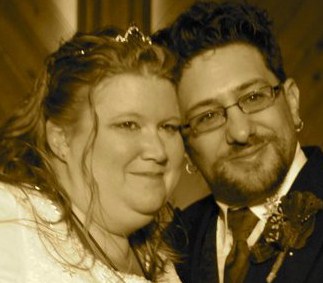 I am a musician, a photographer, a theologian, a customer service rep. I am a wife, a stepmom, a sister, a daughter, an aunt. But mostly I am a child of God striving to live my crazy life the best way I know how. These writings have been born from my journey back to health that I started in June 2011. At that time, I weighed over 300 pounds and needed to lose at least half my weight to be considered in a healthy range. Since then, I’ve lost almost 50 pounds through adjusting my diet and adding exercise. The surprising side effect is the emotional changes that go along with getting healthy – and that is what has prompted me to begin to write.

 Holistic Body Theology