Category Archives: Service
Forward Friday: The Mary-Wannabe-Martha-Reality Check
41 “Martha, Martha,” the Lord answered, “you are worried and upset about many things, 42 but few things are needed—or indeed only one.[a] Mary has chosen what is better, and it will not be taken away from her.” (Luke 10:41-42)
You wanna be like Mary, but in reality, you’re like Martha. Believe me, lovely reader, I know how you feel. I’ve been there, and I’m back there again.
So if you’re a Martha and wanna be like Mary, what do you DO about it?
Here’s a little exercise to try this weekend:
- Recognize your gifts, passions, and personality. Understand and accept who you are. God made you that way for a reason. God likes you like this!
- Recognize how you are feeling. Are you worried and upset? Are you critical and judgmental? Are you jealous of people who seem to have an easier time sitting at the feet of Jesus?
- Identify what is motivating you right now. Are you distracted by the preparations? Are you busy with things that seem necessary but really are not needed?
- Take it to God. Mary and Martha both went straight to Jesus. They just had different catalysts for their encounters with God. Maybe being stressed and overwhelmed by the tasks of your day can be used to turn your attention to the one thing that is truly needed.
- Allow God to redirect your focus. Where should your time and attention be right now? What is truly needed?
Maybe sitting at Jesus’ feet isn’t your natural state of being. Maybe it takes work. It was work for Brother Lawrence, St. Ignatius, and the author of The Cloud of Unknowing, too. That’s why they devoted so much time and effort toward cultivating their focus toward God.
If you’re task-oriented, make time with Jesus one of your “tasks” for the day. Maybe it’s your only task for one whole day, the only and best accomplishment. If you like lists, put time with Jesus on there along with runs to the grocery store and calls to clients.
And if you’re not like this at all, if you’re naturally a Mary, well then…
YOU ROCK! We all wish we could be more like you. Don’t let ANYONE take away what you have chosen. God promised you could stay right where you are at the feet of Jesus, and God will defend you! You just keep on sitting.
For the rest of us, put sitting on your list. And then DO it.
And then come back and share your experience in the comment box below.
The Mary-Wannabe-Martha-Reality: Part 2
So let’s say you’re like me. You are an achiever. You are, as Tom Rath wrote, “utterly dependable.” You are a DOer.
You are like Martha.
38 As Jesus and his disciples were on their way, he came to a village where a woman named Martha opened her home to him. 39 She had a sister called Mary, who sat at the Lord’s feet listening to what he said. 40 But Martha was distracted by all the preparations that had to be made. She came to him and asked, “Lord, don’t you care that my sister has left me to do the work by myself? Tell her to help me!”
41 “Martha, Martha,” the Lord answered, “you are worried and upset about many things, 42 but few things are needed—or indeed only one.[a] Mary has chosen what is better, and it will not be taken away from her.” (Luke 10:38-42)
Notice how Martha responds to the situation. She does not burst into the room and drag Mary away to help her with the preparations. She does not grumble under her breath, building up resentment and anger, and passive-aggressively snub Mary for the next week.
Martha goes straight to Jesus. She tells him exactly how she feels and asks for exactly what she thinks she needs.
Notice how Jesus responds to Martha. He does not condemn her. He does not criticize her work. He does not tell her to stop doing all the good and productive tasks she is responsible for. Here’s what he DOES say:
- You are worried.
- You are upset.
- Most of these things aren’t needed (not that they aren’t good or productive or worthy or useful, just that they aren’t NEEDED). In other words, your energy and effort are misplaced. In Luke’s words, you are distracted.
- Your criticism and judgment of Mary are misplaced.
Martha goes to Jesus with her frustration and anger, and Jesus gently redirects her focus.
This is what mentors and supervisors would call a “teachable moment.” Instead of punishing Martha for her Achiever and Responsible nature, Jesus uses the situation to show Martha the truth about herself — how she is really feeling and what is really motivating her actions — and to help Martha recognize what really is needed and better, and ultimately, what will resolve her feelings and correct her motivations.
Here’s what I love about this passage: what Mary does naturally, Martha has to learn.
Now here’s what we learn from Jesus’ response.
You do not need to change who you are or how you operate.
If you are like me, if you are an exhausted, inexhaustible achiever who is too responsible to allow yourself to let go of and step back from the tasks you have taken upon yourself, then you can breathe a sigh of relief here.
*Whew!*
You will always be the achiever. You will always be responsible.
What you need to learn, what we all need to learn here, is that we are easily distracted by the worries and frustrations around us. We focus on the wrong things. We get caught up in what we think is necessary when really only one thing is needed.
If you’re like me, you want to be like Mary. You want to be a BEer. You want to be satisfied with nothing else than sitting at the feet of Jesus.
You wanna-be-like-Mary, but that is just not naturally who you are. In reality, you are more like Martha.
You don’t feel settled if you haven’t accomplished something for the day. You don’t feel comfortable if you backed out of a commitment or let something fall through the cracks.
That’s okay. God made you with that drive for accomplishment and that dependability. God loves that about you!
So what do you do when you wanna be Mary but are really a Martha?
Find out tomorrow!
The Mary-Wannabe-Martha-Reality: Part 1
If you’re like me, you have a complex.
You have a desire, nay, a driving need, to DO, to DO WELL, and to HAVE DONE more, concurrently, and better than everyone else you know.
You excel at doing, and you draw your self-worth from how much you have done and how well you have done it.
You are a task-completer, a list-checker-off-er. Your number one strength on the StrengthsFinder test is Achiever. (PS. This actually means you have a bigger complex than I do because Achiever is only number three on my StrengthsFinder results. Nany nany boo boo.)
You feel as if every day starts at zero. By the end of the day you must achieve something tangible in order to feel good about yourself. And by “every day” you mean every single day — workdays, weekends, vacations. No matter how much you may feel you deserve a day of rest, if the day passes without some form of achievement, no matter how small, you will feel dissatisfied. You have an internal fire burning inside you. It pushes you to do more, to achieve more. After each accomplishment is reached, the fire dwindles for a moment, but very soon it rekindles itself, forcing you toward the next accomplishment. – Tom Rath, StrengthsFinder 2.0 (p37)
Okay, maybe not all of you are Achievers, but a lot of you are. A lot of Christians are, especially Christian women. We’re taught early and often that we live to serve, and that our value both in our church community and in our homes is based on what, how much, how often, and how well we DO for everyone.
This is not news.
Martha, sister of Lazarus and friend of Jesus, would have scored Achiever as her number one strength, right above Responsibility.
That’s right. This is you, too, and a lot of other Christians. Your word is your bond. You always come through. You never let anything fall through the cracks.
[You] take psychological ownership for anything you commit to, and whether large or small, you feel emotionally bound to follow it through to completion. Your good name depends on it…. This conscientiousness, this near obsession for doing things right, and your impeccable ethics, combine to create your reputation: utterly dependable…. Your willingness to volunteer may sometimes lead you to take on more than you should. – Tom Rath, StrengthsFinder 2.0 (p149)
Super-DOer. That’s you.
You have this need to achieve, and whether you want to or not, you find yourself committed to doing more and more. You are the quintessential soccer mom. You have it all together.
You are super human.
You are BUSY.
You are TIRED.
You are JEALOUS and CRITICAL of anyone who is not caught up in your whirlwind of activity and responsibility. You JUDGE.
How do you have time and energy to do and be everything everyone wants and expects you to do and be?
You are a DOer.
So was Martha.
Okay, that’s not news.
Rachel touched on this when she said advertising tries to make us believe we aren’t enough. Kathy touched on this when she said that well-behaved women won’t change the church.
What you need to know is what to DO about it, right?
To be continued…
Forward Friday: What’s Yours?
This week I reflected on four aspects of body theology that are important to me: gender, sexuality, community, and body image.
This weekend, try reflecting on one aspect of body theology that is important to you. Choose from the list below or make up your own. Share what you reflected on in the comment box below.
- identity
- image of God
- incarnation of Christ
- physicality
- sexuality
- body image
- media literacy
- cultural discernment
- community
- body of Christ
- equality
- service
- social justice
- creation care
- spirituality
Guest Post: 3 Must-haves for Lent: Part 2
My friend Jenn Cannon has graciously agreed to share her experience of fasting during this Lenten season and its impact on her body theology. If you missed it, check out Part 1. You can find more of her writing here.
Many people, in modern Christianity, have taken the idea of a fast during Lent and tried to turn it into a positive action. Instead of simply abstaining from certain foods, people are opting to try another way to express the same idea without the physical side-effects. As an example: my former pastor gives up his morning Starbucks and all fast food and then donates the funds that he has saved to his favorite charity.
Unhealthy Fasting
As I have journeyed to get healthier in the last 8 months, I have found that I cannot outright deny myself a certain food without the danger of a binge looming on the horizon. If I tell myself I cannot have chocolate for 40 days (or 46 depending on how you count it), I will most certainly have a meltdown and gorge at the end when I finally allow myself the chocolate – or I will be frantically trying to find something else to fill that need.
Either way – I lose sight of the meaning of the fast, and also do myself more harm than good. Many people who are journeying back to health will tell you the same horror stories – fasting from any certain thing is a recipe for a binge.
Healthy Fasting
So I have learned to eat things in moderation. Great. But then what am I supposed to do about Lent? If I want to participate in the spiritual journey of preparing myself for the coming sacrifice of Christ, what then can I do instead of giving up meat (which I already eat very little of) or chocolate (again, a minor part of my diet and not really a sacrifice) or anything similar?
I am fasting from laziness. Fasting from sitting on my butt. My Lenten practice, this year, is to commit to some form of intentional exercise for at least 30 minutes every day. I am choosing to observe Sundays as the mini-Easter that they are, and so are not part of the fast.
So – that is my physical piece. But, as a Lenten practice, it is fruitless and self-serving unless I add in the other aspects of prayer and service. So, my prayer (or God-focus) part of Lent is to read Scripture more regularly, pray while I’m on the treadmill, and change the music I listen to to help keep my thoughts centered on God while I’m walking. As for service, I am always looking for the people who cross my path that I believe God sent to me. Also, my discipline for service will take the form of writing.
Writing as Spiritual Discipline
I have a lot going on in my head as I journey back to health – and with nudging from good friends (like Laura) – am realizing I have much to say and share as I do. So I will be writing – intentionally – during the full season of Lent.
My writing is intended to help others understand this journey of getting healthy, encourage those who are struggling with their own health, and – selfishly – to help me process some of the stuff I need to think about – specifically regarding my self-image.
Join the Conversation
So have you thought about what you’re giving up for Lent? Do you have a reason for your choice? And how does your personal choice (Self-focus) tie back in to the other two aspects of Fasting: God-focus and Others-focus? Leave a comment in the box below to share your journey this Lenten season.
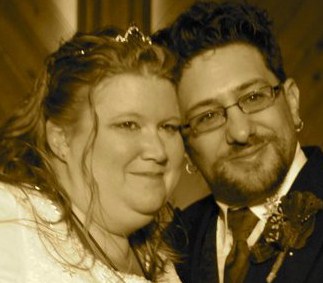 I am a musician, a photographer, a theologian, a customer service rep. I am a wife, a stepmom, a sister, a daughter, an aunt. But mostly I am a child of God striving to live my crazy life the best way I know how. These writings have been born from my journey back to health that I started in June 2011. At that time, I weighed over 300 pounds and needed to lose at least half my weight to be considered in a healthy range. Since then, I’ve lost almost 50 pounds through adjusting my diet and adding exercise. The surprising side effect is the emotional changes that go along with getting healthy – and that is what has prompted me to begin to write.
Guest Post: 3 Must-haves for Lent: Part 1
My friend Jenn Cannon has graciously agreed to share her experience of fasting during this Lenten season and its impact on her body theology. You can find more of her writing here.
I am a musician, a photographer, a theologian, a customer service rep. I am a wife, a stepmom, a sister, a daughter, an aunt. But mostly I am a child of God striving to live my crazy life the best way I know how. These writings have been born from my journey back to health that I started in June 2011. At that time, I weighed over 300 pounds and needed to lose at least half my weight to be considered in a healthy range. Since then, I’ve lost almost 50 pounds through adjusting my diet and adding exercise. The surprising side effect is the emotional changes that go along with getting healthy – and that is what has prompted me to begin to write.
Last week, Christians around the globe marked the beginning of the season of Lent. This season of 40 days (well, really 46) of preparation and repentance is observed so that we can prepare our hearts and minds for the coming of Holy Week and Easter. We intend to spend these 40 days focused on God and Christ and the upcoming sacrifice that saves us.
At least – that’s the intent.
Lenten Fasting
Historically, Lent has included a fast of some sort: abstaining from certain foods, from all food, from bad habits, from sex… The Lenten fast has taken so many different forms over the years. In more Orthodox congregations, the fast is prescribed and required (with some dispensations granted for the extremely ill or weak). In many Protestant churches, the fast is voluntary (at most) and unknown (at least). Some congregations don’t observe Lent at all.
What then does this Fast, this abstaining, really mean? What is the purpose and how do we observe it correctly? And really – what does fasting have to do with Body Theology at all?
The Lenten practice was originally a 3-part one: prayer, fasting, service. The idea is that one practice without the other 2 is incomplete. So – if we choose to fast simply to fast, we miss the mark. The whole point is to prepare ourselves for Christ’s sacrificial death on the cross and life-giving resurrection. If we focus ONLY on the fast, we miss the rest of the preparation.
Lenten Prayer
Fasting without prayer is simply denying ourselves. If we use the popular example of food – we are simply denying ourselves sustenance, and missing the point. Prayer – focus on GOD – is crucial. Without it, we are perhaps using the fast in a multitude of incorrect ways: pride at our will or self-control; attempting to manipulate others (as in the case of a hunger strike); proof of our own piousness; and many others. And physically, denying ourselves a certain food can enhance the desire for it – to such an extent that it could lead to a binge. Unhealthy AND ungodly.
When we add prayer – or scripture reading or any other discipline that focuses our attention on God instead of ourselves – we immediately rescue the Fast from the worldly concerns and it can become, again, a part of worship. We can worship through our physical acts, provided our hearts and minds are in the right place.
Lenten Service
As we worship God physically and spiritually, we must remember that we are called to love our neighbor, as well. When pressed by the Sadducees to name the greatest commandment in the Law, Jesus answered:
“Love the Lord your God with all your heart and with all your soul and with all your mind.” This is the first and greatest commandment. And the second is like it: “Love your neighbor as yourself.” All the Law and the Prophets hang on these two commandments. ~ Matthew 22: 34-40
Christ didn’t make a distinction between loving self, loving God, and loving others. They are all tied together into one answer. The Greatest Commandment. And so, too, should our Lenten practice be….
Come back tomorrow for the thrilling conclusion!
A Confession and an Open Door
Any assault, manipulation, depersonalization of our earth is even more destructive to our humanity than is the depersonalization of our own bodies. – Wuellner, Prayer and Our Bodies
I have a confession to make. I’m not a very good activist. I’m not politically-minded, and I don’t enjoy creating or participating in demonstrations or rallies. I believe that issues of social justice and creation care are important and that, as a Christian, I should work for them. But I’m not good at it.
Over the last two weeks, I’ve had the opportunity to explore Wuellner’s book with all of you, and I’ve enjoyed and resonated with every chapter…except this one.
Chapter 9: Prayer for the Body of the Earth
As she did in Chapter 8 with the human body and embodied community, Wuellner draws parallels between the human body and what she calls “the body of the earth.” She writes, “Our earth body, with its atmosphere, its water, its soil, its shrubs, trees, grass, animal life, is as much a bodily self as we are.”
Wuellner suggests that, as we often do with our own bodies, humankind has treated the earth with disdain and disgust: “At best, we have taken it for granted, used it, manipulated it. At worst, we have assaulted it, ravaged it, and, for immediate gain, destroyed many forms of its life with careless unconcern, poisoning its air, water, and soil.”
That sounds like a social activist‘s speech, doesn’t it? Next, we expect to hear some pithy catchphrase like “Save the Whales.”
But Wuellner takes a different tactic. As a professor, ordained minister, and trained spiritual director, Wuellner is much less interested in taking up The Cause and much more interested in a holistic discussion of bodily prayer–one that includes prayer for the earth that Genesis tells us God gave into our hands to maintain.
In fact, Wuellner suggests that part of the empowerment we feel when we experience healing is a desire toward creation care: “As we relate anew to our bodily selves, we begin to feel an urgency to relate anew to the body of our earth.” She takes a step further to suggest that the “earth itself, even as our bodies, needs our healing and prayer as much as we need its healing and prayer.”
Wuellner takes care to remind her readers that concern with the well-being of the earth is not a new concept in Christian history and theology. She quotes a reflection from Hildegard of Bingen:
Does not humanity know that God
is the world’s creator?With nature’s help,
humankind can set into creation
all that is necessary and life sustaining.
An Open Door
Are you an advocate for social justice and creation care? Would you like to share your experience? I’d like to establish an open door, through which any of you lovely readers are welcome to step by way of writing a guest post that explores the service aspect of body theology. This is a standing offer, at least for the time being. If you’re interested, please send me your submission at bodytheologyblog@gmail.com.
Not ready for a guest post? Drop me a line in the comments below to share your story.

 Holistic Body Theology