Category Archives: Guest post
Guest Post: 3 Must-haves for Lent: Part 1
My friend Jenn Cannon has graciously agreed to share her experience of fasting during this Lenten season and its impact on her body theology. You can find more of her writing here.
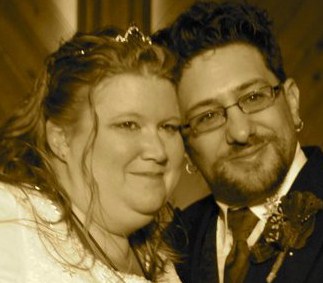 I am a musician, a photographer, a theologian, a customer service rep. I am a wife, a stepmom, a sister, a daughter, an aunt. But mostly I am a child of God striving to live my crazy life the best way I know how. These writings have been born from my journey back to health that I started in June 2011. At that time, I weighed over 300 pounds and needed to lose at least half my weight to be considered in a healthy range. Since then, I’ve lost almost 50 pounds through adjusting my diet and adding exercise. The surprising side effect is the emotional changes that go along with getting healthy – and that is what has prompted me to begin to write.
Last week, Christians around the globe marked the beginning of the season of Lent. This season of 40 days (well, really 46) of preparation and repentance is observed so that we can prepare our hearts and minds for the coming of Holy Week and Easter. We intend to spend these 40 days focused on God and Christ and the upcoming sacrifice that saves us.
At least – that’s the intent.
Lenten Fasting
Historically, Lent has included a fast of some sort: abstaining from certain foods, from all food, from bad habits, from sex… The Lenten fast has taken so many different forms over the years. In more Orthodox congregations, the fast is prescribed and required (with some dispensations granted for the extremely ill or weak). In many Protestant churches, the fast is voluntary (at most) and unknown (at least). Some congregations don’t observe Lent at all.
What then does this Fast, this abstaining, really mean? What is the purpose and how do we observe it correctly? And really – what does fasting have to do with Body Theology at all?
The Lenten practice was originally a 3-part one: prayer, fasting, service. The idea is that one practice without the other 2 is incomplete. So – if we choose to fast simply to fast, we miss the mark. The whole point is to prepare ourselves for Christ’s sacrificial death on the cross and life-giving resurrection. If we focus ONLY on the fast, we miss the rest of the preparation.
Lenten Prayer
Fasting without prayer is simply denying ourselves. If we use the popular example of food – we are simply denying ourselves sustenance, and missing the point. Prayer – focus on GOD – is crucial. Without it, we are perhaps using the fast in a multitude of incorrect ways: pride at our will or self-control; attempting to manipulate others (as in the case of a hunger strike); proof of our own piousness; and many others. And physically, denying ourselves a certain food can enhance the desire for it – to such an extent that it could lead to a binge. Unhealthy AND ungodly.
When we add prayer – or scripture reading or any other discipline that focuses our attention on God instead of ourselves – we immediately rescue the Fast from the worldly concerns and it can become, again, a part of worship. We can worship through our physical acts, provided our hearts and minds are in the right place.
Lenten Service
As we worship God physically and spiritually, we must remember that we are called to love our neighbor, as well. When pressed by the Sadducees to name the greatest commandment in the Law, Jesus answered:
“Love the Lord your God with all your heart and with all your soul and with all your mind.” This is the first and greatest commandment. And the second is like it: “Love your neighbor as yourself.” All the Law and the Prophets hang on these two commandments. ~ Matthew 22: 34-40
Christ didn’t make a distinction between loving self, loving God, and loving others. They are all tied together into one answer. The Greatest Commandment. And so, too, should our Lenten practice be….
Come back tomorrow for the thrilling conclusion!
A Confession and an Open Door
Any assault, manipulation, depersonalization of our earth is even more destructive to our humanity than is the depersonalization of our own bodies. – Wuellner, Prayer and Our Bodies
I have a confession to make. I’m not a very good activist. I’m not politically-minded, and I don’t enjoy creating or participating in demonstrations or rallies. I believe that issues of social justice and creation care are important and that, as a Christian, I should work for them. But I’m not good at it.
Over the last two weeks, I’ve had the opportunity to explore Wuellner’s book with all of you, and I’ve enjoyed and resonated with every chapter…except this one.
Chapter 9: Prayer for the Body of the Earth
As she did in Chapter 8 with the human body and embodied community, Wuellner draws parallels between the human body and what she calls “the body of the earth.” She writes, “Our earth body, with its atmosphere, its water, its soil, its shrubs, trees, grass, animal life, is as much a bodily self as we are.”
Wuellner suggests that, as we often do with our own bodies, humankind has treated the earth with disdain and disgust: “At best, we have taken it for granted, used it, manipulated it. At worst, we have assaulted it, ravaged it, and, for immediate gain, destroyed many forms of its life with careless unconcern, poisoning its air, water, and soil.”
That sounds like a social activist‘s speech, doesn’t it? Next, we expect to hear some pithy catchphrase like “Save the Whales.”
But Wuellner takes a different tactic. As a professor, ordained minister, and trained spiritual director, Wuellner is much less interested in taking up The Cause and much more interested in a holistic discussion of bodily prayer–one that includes prayer for the earth that Genesis tells us God gave into our hands to maintain.
In fact, Wuellner suggests that part of the empowerment we feel when we experience healing is a desire toward creation care: “As we relate anew to our bodily selves, we begin to feel an urgency to relate anew to the body of our earth.” She takes a step further to suggest that the “earth itself, even as our bodies, needs our healing and prayer as much as we need its healing and prayer.”
Wuellner takes care to remind her readers that concern with the well-being of the earth is not a new concept in Christian history and theology. She quotes a reflection from Hildegard of Bingen:
Does not humanity know that God
is the world’s creator?With nature’s help,
humankind can set into creation
all that is necessary and life sustaining.
An Open Door
Are you an advocate for social justice and creation care? Would you like to share your experience? I’d like to establish an open door, through which any of you lovely readers are welcome to step by way of writing a guest post that explores the service aspect of body theology. This is a standing offer, at least for the time being. If you’re interested, please send me your submission at bodytheologyblog@gmail.com.
Not ready for a guest post? Drop me a line in the comments below to share your story.
Guest Post: Insecurity and the Media
Introducing my first guest poster: Matt Cavanaugh
There is power in security. This may pertain to financial security… intellectual security… or physical security.
For years leading up to the neo-women’s lib movement of the 90’s, marketing guru’s assaulted women with example after example of how women needed to attain a physical standard possible for very few women. This marketing strategy was consistently successful and led to mondo sales in makeup products, corrective surgeries, and anything else that would propose to fix a woman’s sense of insecurity. However, in the 90’s and early 2000’s, the tide began to change and the standards set forth for women began to be a bit more attainable. More and more women became comfortable (or more comfortable at least) in their own skin. The result? Marketing guru’s shifted their focus more to men: specifically towards creating insecurities towards men.
In came the erectile dysfunction ads, the increase in male skin being shown in magazines, countless haircare products aimed at preventing baldness, diet pills specific for men, etc… These marketing strategies worked and lucrative companies were birthed around “curing” men of these insecurities. Eating disorders and depression became more common in men. Physical insecurity, specifically, has become a much more prominent issue for men in the last two decades.
So what does this have to do with body theology? In truth, everything. How difficult is it to worship the Lord, to feel proud, to feel confident when a person feels overwhelming shame and guilt towards their own appearance? Talk about handcuffing!
The fact of the matter is that both men and women are increasingly under attack within the media of today’s world. So what do we do? Do we unplug from the media around us? That is for you to decide for yourself. Me…well… I choose to remain connected to tv, radio, movies, magazines… but I always attempt to see media for what it is: entertainment that often promotes a false reality. I’m never going to look like Brad Pitt or David Beckham and I’m completely ok with that.
My goal in life, in faith, and in everything else is to heed Tony Horton’s advice in his P90x workout routine: “To do my best and forget the rest.” My best is good enough for myself, the people that care for me, and most importantly, my Lord and Savior who loves me and my imperfections all the same.
Matt Cavanaugh is a blogger, newspaper columnist, avid hiker, and lover of the outdoors. You can read about his many excursions at OutdoorsInCali.com.

 Holistic Body Theology