Author Archives: Laura K. Cavanaugh
Guest Post: Human Dignity–Part 2
My dear friend Stacey Schwenker has graciously agreed to share some of her journey through experiencing her sexuality as a single person during her 50 Day Challenge. If you missed it, read Part 1. You can find more of her journey here.
And now, the conclusion…
So I just let it wash over me. I sat for a good while letting his love soak in. I cried. I laughed. It felt like my own heart was growing. I was being flooded by his acceptance and reclamation of his daughter. It was if I had let getting older with the new wrinkles and the cottage cheese cellulite separate me from God. As if my body was unworthy of his love now.
No. He not only reminded me of his love, he embraced me in who I am. God loved this body on that day many years ago when I took my first breath. He loves this body right now. And he will go on loving my body long past my last breath on earth—whatever that will look like. I am so precious to God.
As I sat and reveled in all of my blood pumping wonder, I thought about how I want others to treat my body—with respect and care. This comes only from its being something precious to God. This got me to thinking about others. I thought about my three roommates and their beautiful bodies. I considered them in their own mothers’ wombs and growing up as children.
Then I expanded that circle to others. However, when I got to thinking about bodies all over the world I stopped dead in my tracks. So many bodies are not respected. Many are treated as possessions or used as commodities. They are stripped naked, not of their own volition but that of a pimp or an owner who inspects their goods and throws them at willing buyers. Their beauty and uniqueness are trampled on. Their vulnerability is used as a weapon against them.
This is when my praying became more than exploration or asking God for eyes like his to see my body as he sees me. This is when I heard God call me to action. To fight. To take action. I might look into donating my time or money. In my own personal life, my vocation and calling involve education and healing in the realm of sexuality. To help others sees the value of their bodies. Once they can know that deep in their souls, they can then begin to have empathy for the value of others’ bodies. To help others see their deep need for intimacy and examine the choices they make in seeking to know and be known. To understand how sex might be used as a quick route to closeness but a short one to nagging emptiness.
The more I see how my sexuality is a part of me—not a distant part or a shameful part—the healthier I feel. My embodiedness and my femininity and my desire to be in deep relationships are all part of my sexuality. And to deny any part of this murders aspects of my humanity. And to recklessly embrace parts of this in disproportionate ways feeds a nasty monster in me. We are moral beings who have choices to make. Are we brave enough to admit that we actually make choices about our sexuality or shall we sweep things under the rug?
Christians contribute to sex trafficking in direct and indirect ways. I know that if we have more discussions about our sexuality and make more choices to embrace our sexuality, we will actively be fighting against using sexuality as a weapon.
I will begin by fighting for my own body—to reclaim its goodness by the creator God. And I will not stop until I fight for others’ bodies and their goodness.
Will you join the fight?
 Hailing from Cincinnati, Ohio, Stacey now resides in Washington, DC. She occupies her time by writing, baking, and enjoying the outdoors through running, biking, and hiking. She also spends copious amounts of time with her three wonderful housemates and the people at her church, The District Church, where she leads a small group on healthy Christian sexuality. Stacey works in advertising sales for Sojourners, an educational and advocacy organization that publishes a monthly magazine and a daily blog (sojo.net). Stacey is passionate about seeing healing and integration of our sexuality and spends a great deal of time reading, writing, and talking about it. She also likes a good cup of tea and handwriting letters.
Guest Post: Human Dignity–Part 1
My dear friend Stacey Schwenker has graciously agreed to share some of her journey through experiencing her sexuality as a single person during her 50 Day Challenge. You can find more of her journey here.
Hailing from Cincinnati, Ohio, Stacey now resides in Washington, DC. She occupies her time by writing, baking, and enjoying the outdoors through running, biking, and hiking. She also spends copious amounts of time with her three wonderful housemates and the people at her church, The District Church, where she leads a small group on healthy Christian sexuality. Stacey works in advertising sales for Sojourners, an educational and advocacy organization that publishes a monthly magazine and a daily blog (sojo.net). Stacey is passionate about seeing healing and integration of our sexuality and spends a great deal of time reading, writing, and talking about it. She also likes a good cup of tea and handwriting letters.
This morning I prayed naked. This exercise is part of a 50 Day Challenge I am doing for Lent. Some friends of mine created 50 Suggestions to Embrace Healthy Sexuality and one of them is strip the clothes and prostrate oneself. For me it looked more like huddling under my covers to stay warm (my bedroom is in a basement and my sensitive body doesn’t much care for its constant 65 degrees).
As I sat there praying, naturally I thought about my body. At first I began to consider all of its shapes and sizes—the feel of my skin and hair and curves underneath my palms. I thought about its beauty and how uniquely it was created. There are few other things that have skin similar to us humans or a bone structure like ours. And we each have our own and only attributes: fingerprints that never have and never will have any match; the unique combination of height, hair color, facial composition, and idiosyncrasies.
I am the only me. You are the only you. Ever. Period. We truly are uniquely and fearfully made (Ps 139:14). Molded with God’s own hands and done so that we are each special to him. I am who he meant me to be. He set each bone in place and laced each fiber of muscle and sinew. He etched each eyelash and painted on every fingernail.
And because of this, I am beautiful to God. Things that others might scoff at or look down upon, God embraces and finds endearing. Understanding how God is so pleased and proud of my body means that I scoff at him when I reject parts of my physical attributes. I do not fully understand grace if I do not treat my body with the love and respect that one of God’s beloveds deserves.
True, I have the ability to impact my flesh and bones. I can influence my weight, my hair and eye color, my amount of hair, and my muscle mass. I can dress it up or dress it down. But, in all that I do am I honoring God with my body? Am I caring for every cell of my body through my actions? Or am I spitting in God’s face?
Sitting in my bed I also thought about my vulnerability. Being stripped from things that hide me. It felt like a barrier had been removed between me and God. It wasn’t like I was clinging to my clothing in an effort to distance myself from him. Rather, I just realized how he sees me all the time. I felt more human and I felt him as more of God. Somehow I could experience his love more deeply. I wasn’t earning his love by creating or doing. I was stuck in all my birthday suit nakedness to lie before him. And he accepts me. He loves me……
Come back tomorrow for the thrilling conclusion!
Bathtub Spirituality: Getting Naked Before God
I’ve always hated showers. Give me a glistening white tub full of sudsy warm water, candles on the ledge, and a glass of red wine. That’s the way to be clean.
Showers are for the hurried, getting clean all in a rush of water hurtling down and straight into the drain–like getting caught in a downpour and giving up any hope of finding shelter before you’re soaked. Showers are for standing; you’ve got someplace else to go–and you’re going to be late!
Baths are for lingering, resting, enjoying. No agenda. No interruptions. Only peace. Warm, scented, slightly alcoholic peace. Taking a bath is my favorite form of centering prayer.
I’ve had some very profound moments, naked among the bubbles and salts and dripping faucet. Moments when God speaks, when my heart breaks, when I am listening. Moments of forgiveness, release, understanding, wonder. Moments of experiencing God’s tenderness, mercy, lovingkindness.
In these moments I feel like nothing separates me from God. I can lie back in the water until my ears are covered and my hair swishes like seaweed around my head and feel held, encompassed, hemmed in. I can stretch my legs one over the other, stick my big toe in the leaky faucet and examine myself exactly as God knit me together–my skin softened by the soap and salts and getting wrinkly from the long soak.
I can be fully myself in these moments, alone in the sanctuary of my white bathtub. In these private moments I share my most intimate, sacred self with the Creator. No cathedral, chapel, prayer garden, or monastery compares to the holiest of holies that is my tiled bathroom–with the steamed-up mirror, flower-shaped bathmat, and humming air vent that occasionally creaks when one of the screws comes loose.
That is my sacred space. That is where I am most spiritual–and most physical. That is where I experience God–in the bathtub.
This week I’m honored to host a beautiful moment in my dear friend Stacey Schwenker’s journey through experiencing her sexuality as a single person. She’ll be sharing her experience of getting naked before God tomorrow.
Until then, how do you get naked before God?
Performing Open-Heart Surgery
Since December, I have seen four different doctors and had ten separate appointments. I have undergone multiple tests and procedures–all to rule out causes of my unexplained fatigue. Now the doctors are at a loss. Perhaps I have chronic fatigue or some other nebulous disorder or syndrome. Such things are difficult to diagnose. But I think I know the real cause of my fatigue.
God as Surgeon
My spiritual director once said that experiencing God’s healing is sometimes like having a surgeon perform complicated, invasive procedures while we are under anesthesia. When God is doing this kind of healing, she said, it would be too painful and scary for us to be awake and aware of God’s work. So we are put to sleep. Then when we awake, our bodies are exhausted and need rest to complete the healing process the Surgeon began in us.
At the time, her analogy didn’t really resonate with me. I was in so much emotional and spiritual pain that I did not know how to let go and rest, allowing God to do the hard work. I wanted God to show me what needed to be done so I could do the work myself, understand exactly what was happening, and remain in control.
Looking back, my attitude was as ridiculous as my telling a doctor I wanted to perform my own open-heart surgery. Not only do I have no medical training, but I also would not be able to survive the experience of cutting through my own flesh. The pain would be too great, and the procedure would be too complicated. If I needed open heart surgery, I would have to trust the surgeon to do a good job. I would have to be anesthetized during the procedure, and then I would have to rest and allow my body to recover afterward.
God as Teacher
Ever since I completed my degree in 2008, God has been teaching me (ironic, no?) how to rest. I have slowly been learning how to let go of my over-active drive to DO–to be an achiever and to be productive. I’ve been a terrible student, I must admit, but God is an ever-patient teacher.
Despite my resistance, God performed a great work in me in the past few years, one that I am still not completely sure I understand or know the effects of. Now, my surgery is over. I have left the operating room, and the anesthesia has worn off. The hard work is done, and I’m awake!
Physical and Spiritual Rest
My body has been telling me for months that I needed to rest, and I just could not understand why. After stumping half the doctors in this town, I think it’s safe to say that it’s time to give up BEING AWAKE. The surgery may be over, but the spiritual healing process has only just begun.
Now I must endure a new season of recovery. I must allow myself to feel the effects of God’s work in me and give myself time to adjust and heal. That is how I choose to spent this season of Lent. I’m giving up my DO-ER spirit and allowing God to complete the good work begun in me.
So for Lent, I will sleep as many hours as I can. When I am awake, I will rest in bed as much as I can. My fast may not look very difficult or spiritual, but it is both. I am relinquishing control (again) and allowing God to take care of me–mind, body, and spirit.
Guest Post: 3 Must-haves for Lent: Part 2
My friend Jenn Cannon has graciously agreed to share her experience of fasting during this Lenten season and its impact on her body theology. If you missed it, check out Part 1. You can find more of her writing here.
Many people, in modern Christianity, have taken the idea of a fast during Lent and tried to turn it into a positive action. Instead of simply abstaining from certain foods, people are opting to try another way to express the same idea without the physical side-effects. As an example: my former pastor gives up his morning Starbucks and all fast food and then donates the funds that he has saved to his favorite charity.
Unhealthy Fasting
As I have journeyed to get healthier in the last 8 months, I have found that I cannot outright deny myself a certain food without the danger of a binge looming on the horizon. If I tell myself I cannot have chocolate for 40 days (or 46 depending on how you count it), I will most certainly have a meltdown and gorge at the end when I finally allow myself the chocolate – or I will be frantically trying to find something else to fill that need.
Either way – I lose sight of the meaning of the fast, and also do myself more harm than good. Many people who are journeying back to health will tell you the same horror stories – fasting from any certain thing is a recipe for a binge.
Healthy Fasting
So I have learned to eat things in moderation. Great. But then what am I supposed to do about Lent? If I want to participate in the spiritual journey of preparing myself for the coming sacrifice of Christ, what then can I do instead of giving up meat (which I already eat very little of) or chocolate (again, a minor part of my diet and not really a sacrifice) or anything similar?
I am fasting from laziness. Fasting from sitting on my butt. My Lenten practice, this year, is to commit to some form of intentional exercise for at least 30 minutes every day. I am choosing to observe Sundays as the mini-Easter that they are, and so are not part of the fast.
So – that is my physical piece. But, as a Lenten practice, it is fruitless and self-serving unless I add in the other aspects of prayer and service. So, my prayer (or God-focus) part of Lent is to read Scripture more regularly, pray while I’m on the treadmill, and change the music I listen to to help keep my thoughts centered on God while I’m walking. As for service, I am always looking for the people who cross my path that I believe God sent to me. Also, my discipline for service will take the form of writing.
Writing as Spiritual Discipline
I have a lot going on in my head as I journey back to health – and with nudging from good friends (like Laura) – am realizing I have much to say and share as I do. So I will be writing – intentionally – during the full season of Lent.
My writing is intended to help others understand this journey of getting healthy, encourage those who are struggling with their own health, and – selfishly – to help me process some of the stuff I need to think about – specifically regarding my self-image.
Join the Conversation
So have you thought about what you’re giving up for Lent? Do you have a reason for your choice? And how does your personal choice (Self-focus) tie back in to the other two aspects of Fasting: God-focus and Others-focus? Leave a comment in the box below to share your journey this Lenten season.
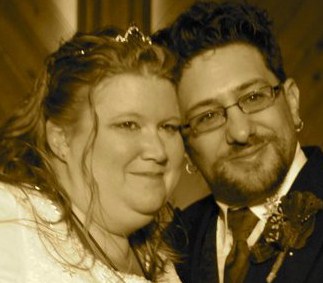 I am a musician, a photographer, a theologian, a customer service rep. I am a wife, a stepmom, a sister, a daughter, an aunt. But mostly I am a child of God striving to live my crazy life the best way I know how. These writings have been born from my journey back to health that I started in June 2011. At that time, I weighed over 300 pounds and needed to lose at least half my weight to be considered in a healthy range. Since then, I’ve lost almost 50 pounds through adjusting my diet and adding exercise. The surprising side effect is the emotional changes that go along with getting healthy – and that is what has prompted me to begin to write.
Guest Post: 3 Must-haves for Lent: Part 1
My friend Jenn Cannon has graciously agreed to share her experience of fasting during this Lenten season and its impact on her body theology. You can find more of her writing here.
I am a musician, a photographer, a theologian, a customer service rep. I am a wife, a stepmom, a sister, a daughter, an aunt. But mostly I am a child of God striving to live my crazy life the best way I know how. These writings have been born from my journey back to health that I started in June 2011. At that time, I weighed over 300 pounds and needed to lose at least half my weight to be considered in a healthy range. Since then, I’ve lost almost 50 pounds through adjusting my diet and adding exercise. The surprising side effect is the emotional changes that go along with getting healthy – and that is what has prompted me to begin to write.
Last week, Christians around the globe marked the beginning of the season of Lent. This season of 40 days (well, really 46) of preparation and repentance is observed so that we can prepare our hearts and minds for the coming of Holy Week and Easter. We intend to spend these 40 days focused on God and Christ and the upcoming sacrifice that saves us.
At least – that’s the intent.
Lenten Fasting
Historically, Lent has included a fast of some sort: abstaining from certain foods, from all food, from bad habits, from sex… The Lenten fast has taken so many different forms over the years. In more Orthodox congregations, the fast is prescribed and required (with some dispensations granted for the extremely ill or weak). In many Protestant churches, the fast is voluntary (at most) and unknown (at least). Some congregations don’t observe Lent at all.
What then does this Fast, this abstaining, really mean? What is the purpose and how do we observe it correctly? And really – what does fasting have to do with Body Theology at all?
The Lenten practice was originally a 3-part one: prayer, fasting, service. The idea is that one practice without the other 2 is incomplete. So – if we choose to fast simply to fast, we miss the mark. The whole point is to prepare ourselves for Christ’s sacrificial death on the cross and life-giving resurrection. If we focus ONLY on the fast, we miss the rest of the preparation.
Lenten Prayer
Fasting without prayer is simply denying ourselves. If we use the popular example of food – we are simply denying ourselves sustenance, and missing the point. Prayer – focus on GOD – is crucial. Without it, we are perhaps using the fast in a multitude of incorrect ways: pride at our will or self-control; attempting to manipulate others (as in the case of a hunger strike); proof of our own piousness; and many others. And physically, denying ourselves a certain food can enhance the desire for it – to such an extent that it could lead to a binge. Unhealthy AND ungodly.
When we add prayer – or scripture reading or any other discipline that focuses our attention on God instead of ourselves – we immediately rescue the Fast from the worldly concerns and it can become, again, a part of worship. We can worship through our physical acts, provided our hearts and minds are in the right place.
Lenten Service
As we worship God physically and spiritually, we must remember that we are called to love our neighbor, as well. When pressed by the Sadducees to name the greatest commandment in the Law, Jesus answered:
“Love the Lord your God with all your heart and with all your soul and with all your mind.” This is the first and greatest commandment. And the second is like it: “Love your neighbor as yourself.” All the Law and the Prophets hang on these two commandments. ~ Matthew 22: 34-40
Christ didn’t make a distinction between loving self, loving God, and loving others. They are all tied together into one answer. The Greatest Commandment. And so, too, should our Lenten practice be….
Come back tomorrow for the thrilling conclusion!
I Gave Up BEING AWAKE for Lent!
I’m excited to have my friend Jenn Cannon guest posting this week. She’s going to be sharing some of her journey with fasting and healthy living in light of the Lenten season. Before I turn my blog over to her, I thought I’d prime the pump, so to speak, by sharing some of my thoughts on Lent and body theology.
I never knew much about Lent growing up. My church didn’t really follow the church calendar outside of Christmas and Easter, and I only knew about Ash Wednesday from my Catholic friend. I was in college before I was ever encouraged to “give something up for Lent.” That first year, I followed my friends’ lead and gave up sweets. I lost eleven pounds in time for Easter Sunday (oh my, what a sweet tooth I had, especially with unlimited soft serve in the dining hall!), but I missed entirely the spiritual purpose of preparing my heart and mind for the celebration of the resurrection.
A couple of years back, I gave up driving for Lent. I could, because I lived close enough to walk pretty much everywhere I needed to go. Walking has always been a spiritual experience for me, although to be fair, I usually prefer to walk in nature than along busy city streets. For the first time, during that season, I sought the spiritual side of Lent and allowed myself to experience the loss of my car and enjoy the presence of God on my daily journeys.
The next year, I stayed overnight at a monastery on Ash Wednesday and learned the spiritual practice of silence. It was a painful time for me, and learning to be silent and still became disciplines I will always carry with me. I wrote a little about my experience at the monastery here.
Giving up BEING AWAKE for Lent
This year, Lent sort of sneaked up on me, and I wasn’t sure I would give up anything at all. But I’ve been uncommonly tired in the last few months, and recently I’ve been pressuring myself to get out of bed and be productive again. Today I decided (a little late, I know) to give up this spirit of doing for Lent and practice being.
Giving up doing for Lent may not sound very applicable to body theology, but it really is. Our western society is collectively sleep-deprived. While most people sleep an average of six hours per night, most people need eight or nine hours. That means most people are living on two or three hours of sleep fewer per night than their bodies really need to function properly.
Last week, after a super-fun sleep study and nap study (during which I was sorely unable to do much of either), I met with my neurologist to find out that my body most likely needs ten to twelve hours of sleep per night. That’s two to four hours more sleep than most people need–and four to six hours more sleep than most people get!
So, for the rest of the Lenten season, I am going to be sleeping as close to ten hours a night as I can. That means moving my work schedule from the morning to the early afternoon. That means going to sleep instead of squeezing in that extra Netflix episode. That means allowing my body to receive the rest that it needs without pressuring myself to get up and be productive all day. That means practicing the spiritual discipline of rest.
We’ll talk a little more about the theology of rest on Thursday. For now, get ready to meet my new guest poster, Jenn Cannon. It’s gonna be awesome! Until then, I wish all you lovely readers peaceful sleep and pleasant dreams…..zzzzzzzzzzzz.

 Holistic Body Theology